








Editor's note: The top energy transition news of November includes major energy initiatives from Texas universities and the creation of a new Carbon Measures coalition. Here are the most-read EnergyCapitalHTX stories from Nov. 1-15:
1. Micro-nuclear reactor to launch next year at Texas A&M innovation campus

Last Energy will build a 5-megawatt reactor at the Texas A&M-RELLIS campus. Photo courtesy Last Energy.
The Texas A&M University System and Last Energy plan to launch a micro-nuclear reactor pilot project next summer at the Texas A&M-RELLIS technology and innovation campus in Bryan. Washington, D.C.-based Last Energy will build a 5-megawatt reactor that’s a scaled-down version of its 20-megawatt reactor. The micro-reactor initially will aim to demonstrate safety and stability, and test the ability to generate electricity for the grid. Continue reading.
2. Baker Hughes to provide equipment for massive low-carbon ammonia plant

Baker Hughes will supply equipment for Blue Point Number One, a $4 billion low-carbon ammonia plant being developed in Louisiana. Photo courtesy Technip Energies.
Houston-based energy technology company Baker Hughes has been tapped to supply equipment for what will be the world’s largest low-carbon ammonia plant. French technology and engineering company Technip Energies will buy a steam turbine generator and compression equipment from Baker Hughes for Blue Point Number One, a $4 billion low-carbon ammonia plant being developed in Louisiana by a joint venture comprising CF Industries, JERA and Mitsui & Co. Technip was awarded a contract worth at least $1.1 billion to provide services for the Blue Point project. Continue reading.
3. Major Houston energy companies join new Carbon Measures coalition

The new Carbon Measures coalition will create a framework that eliminates double-counting of carbon pollution and attributes emissions to their sources. Photo via Getty Images.
Six companies with a large presence in the Houston area have joined a new coalition of companies pursuing a better way to track the carbon emissions of products they manufacture, purchase and finance. Houston-area members of the Carbon Measures coalition are Spring-based ExxonMobil; Air Liquide, whose U.S. headquarters is in Housto; Mitsubishi Heavy Industries, whose U.S. headquarters is in Houston; Honeywell, whose Performance Materials and Technologies business is based in Houston; BASF, whose global oilfield solutions business is based in Houston; and Linde, whose Linde Engineering Americas business is based in Houston. Continue reading.
4. Wind and solar supplied over a third of ERCOT power, report shows

A new report from the U.S. Energy Information Administration shows that wind and solar supplied more than 30 percent of ERCOT’s electricity in the first nine months of 2025. Photo via Unsplash.
Since 2023, wind and solar power have been the fastest-growing sources of electricity for the Electric Reliability Council of Texas (ERCOT) and increasingly are meeting stepped-up demand, according to a new report from the U.S. Energy Information Administration (EIA). The report says utility-scale solar generated 50 percent more electricity for ERCOT in the first nine months this year compared with the same period in 2024. Meanwhile, electricity generated by wind power rose 4 percent in the first nine months of this year versus the same period in 2024. Continue reading.
5. Rice University partners with Australian co. to boost mineral processing, battery innovation
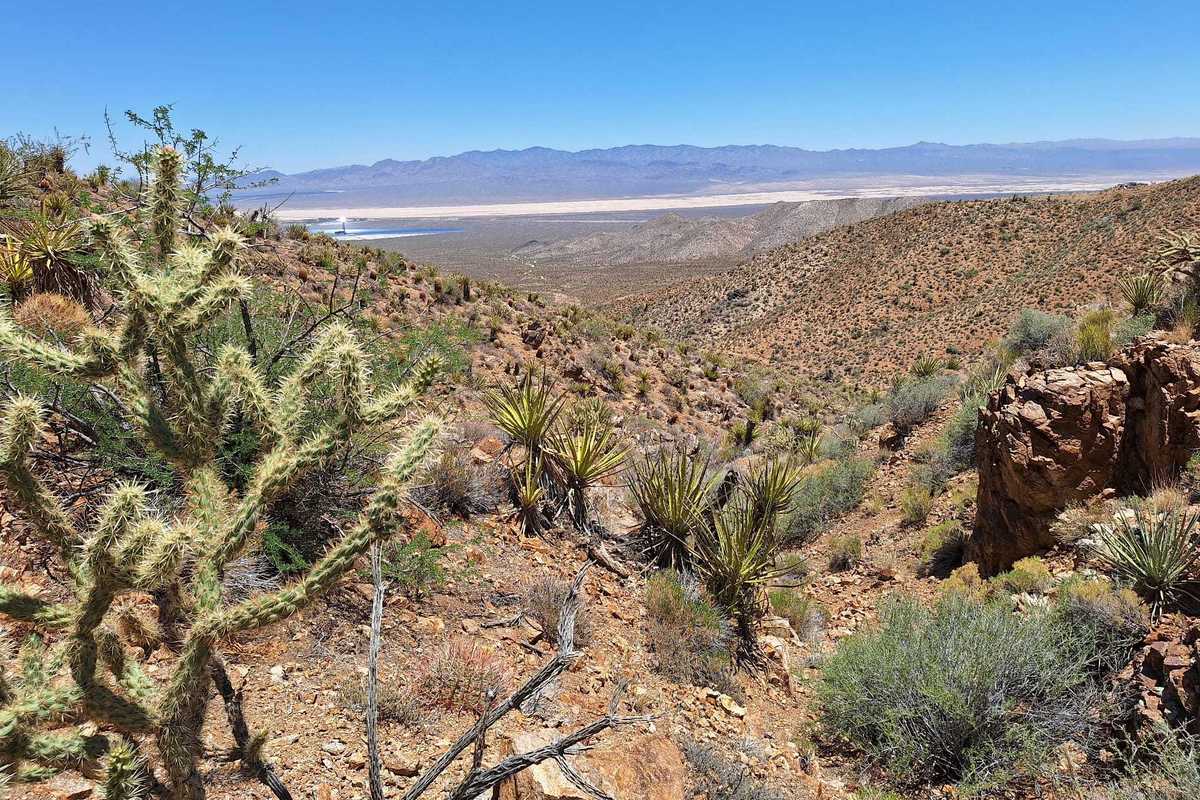
Locksley Resources will provide antimony-rich feedstocks from a project in the Mojave Desert as part of a new partnership with Rice University that aims to develop scalable methods for extracting and utilizing antimony. Photo via locksleyresources.com.au.
Rice University and Australian mineral exploration company Locksley Resources have joined together in a research partnership to accelerate the development of antimony processing in the U.S. Antimony is a critical mineral used for defense systems, electronics and battery storage. Rice and Locksley will work together to develop scalable methods for extracting and utilizing antimony. Continue reading.