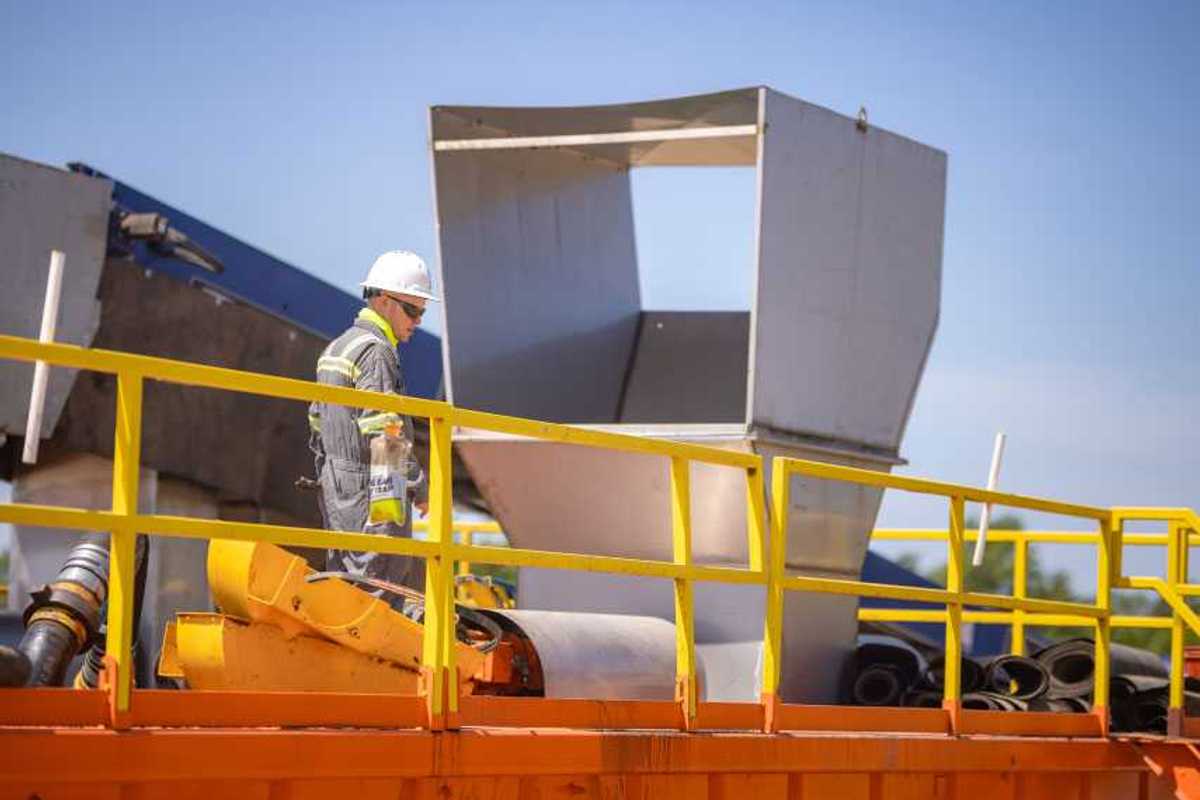
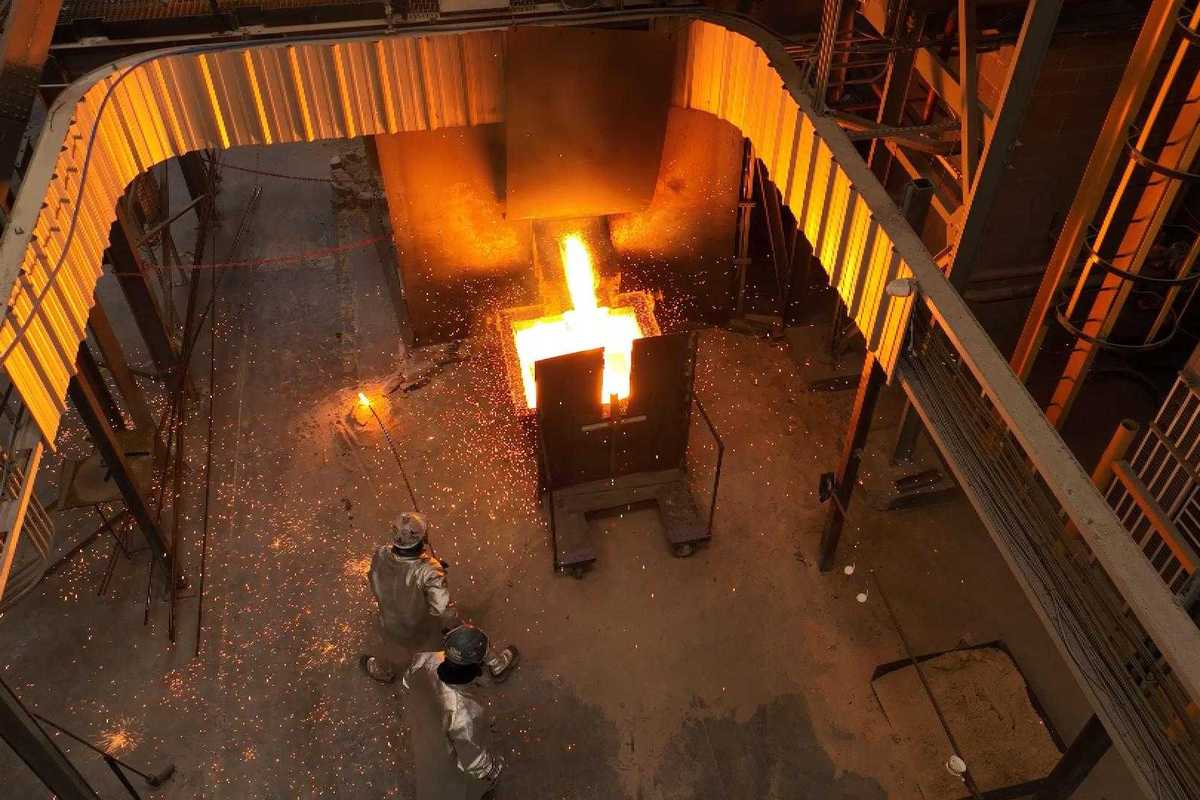
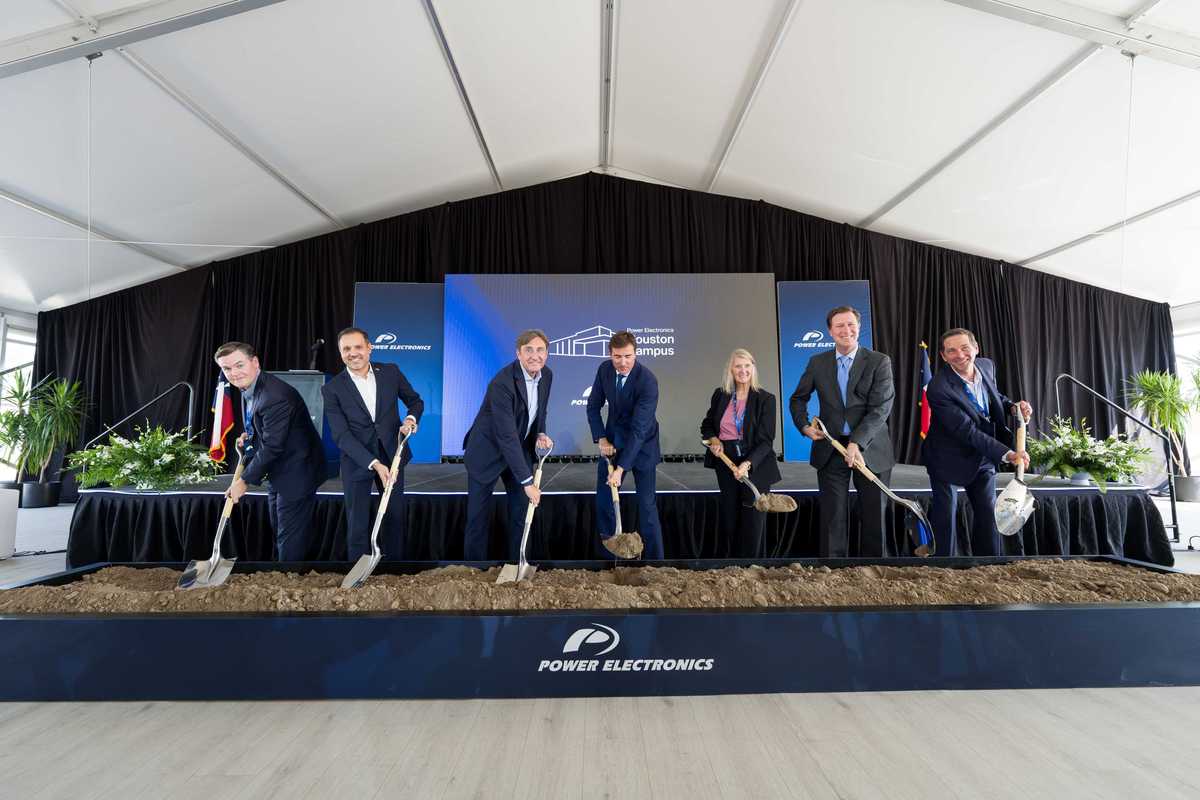
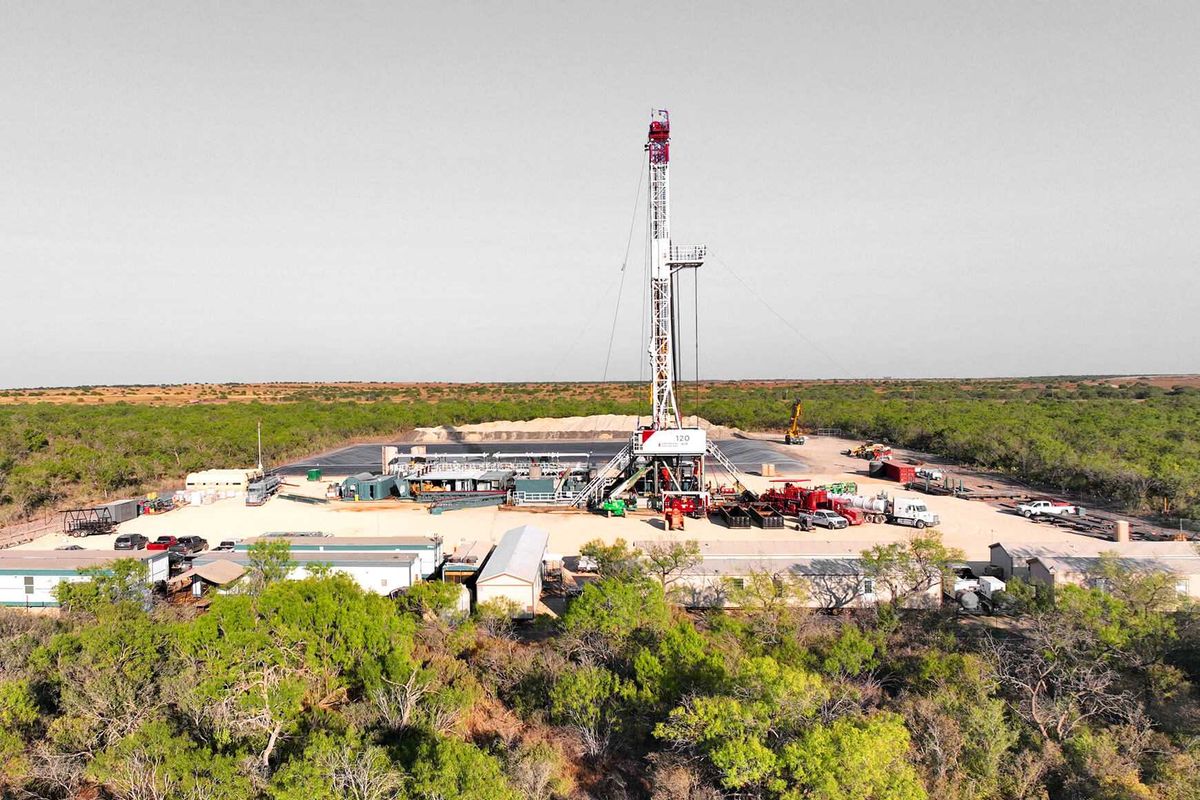
Houston-based Solidec has partnered with Lynas Rare Earth on a clean hydrogen peroxide production pilot in Australia. Photo courtesy Greentown Labs.

Solidec has partnered with Australia-based Lynas Rare Earth, an environmentally responsible producer of rare earth oxides and materials, to reduce emissions from hydrogen peroxide production.

The partnership marks a milestone for the Houston-based clean chemical manufacturing startup, as it would allow the company to accelerate the commercialization of its hydrogen peroxide generation technology, according to a news release.

"This collaboration is a major milestone for Solidec and a catalyst for sustainability in rare earths," Yang Xia, co-founder and CTO of Solidec, said in the release. "Solidec's technology can reduce the carbon footprint of hydrogen peroxide production by up to 90%. By combining our generators with the scale of a global leader in rare earths, we can contribute to a more secure, sustainable supply of critical minerals."

Through the partnership, Solidec will launch a pilot program of its autonomous, on-site generators at Lynas's facility in Australia. Solidec's generators extract molecules from water and air and convert them into carbon emission-free chemicals and fuels, like hydrogen peroxide. The generators also eliminate the need for transport, storage and permitting, making for a simpler, more efficient process for producing hydrogen peroxide than the traditional anthraquinone process.

"Hydrogen peroxide is essential to rare earth production, yet centralized manufacturing adds cost and complexity," Ryan DuChanois, co-founder and CEO of Solidec, added in the release. "By generating peroxide directly on-site, we're reinventing the chemical supply chain for efficiency, resilience, and sustainability."

The companies report that the pilot is expected to generate 10 tons of hydrogen peroxide per year.

If successful, the pilot would serve as a model for large-scale deployments of Solidec's generators across Lynas' operations—and would have major implications for the high-performance magnet, electric vehicles, wind turbine, and advanced electronics industries, which rely on rare earth elements.

"This partnership with Solidec is another milestone on the path to achieving our Towards 2030 vision," Luke Darbyshire, general manager of R&I at Lynas, added. "Working with Solidec allows us to establish transformative chemical supply pathways that align with our innovation efforts, while contributing to our broader vision for secure, sustainable rare earth supply chains."
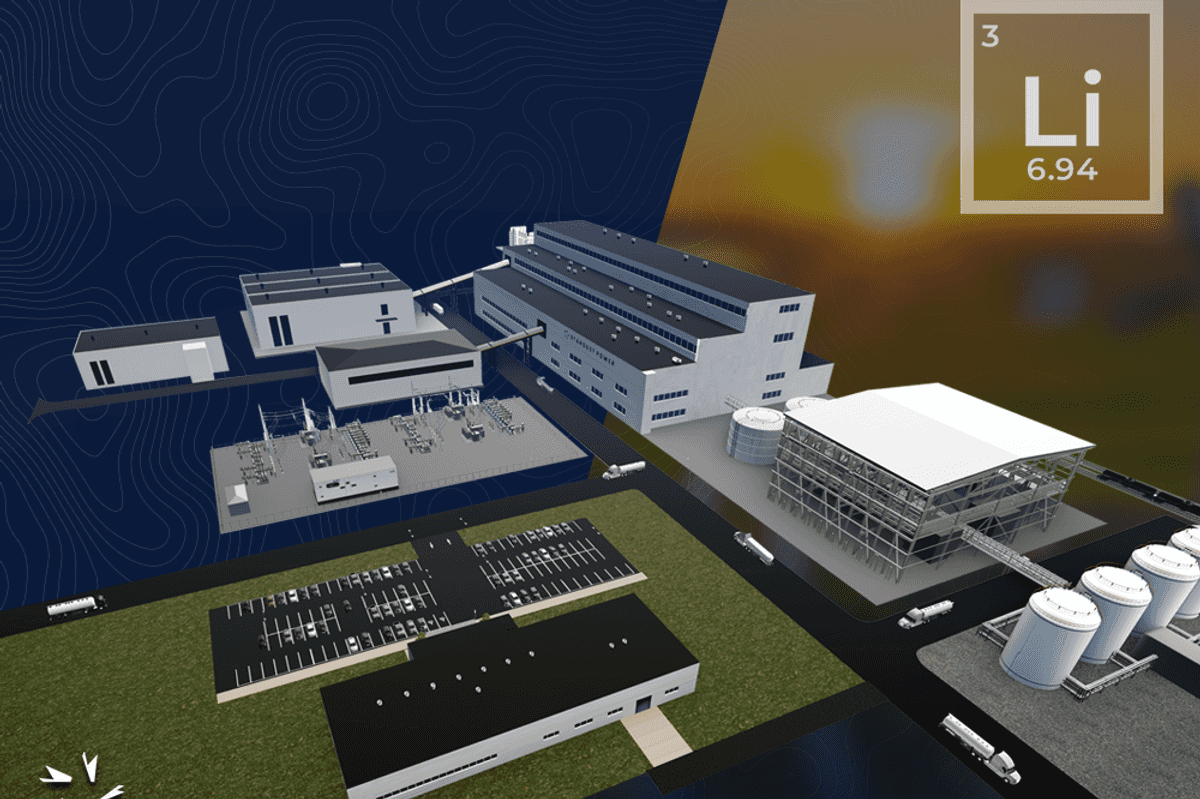
Houston-based Solidec has closed an oversubscribed pre-seed round led by New Climate Ventures. Photo courtesy Greentown Labs.

Houston clean-chemicals startup Solidec raises $2M to scale tech

fresh funding

Solidec, a Houston startup that specializes in manufacturing “clean” chemicals, has raised more than $2 million in pre-seed funding.

Houston-based New Climate Ventures led the oversubscribed pre-seed round, with participation from Plug and Play Ventures, Ecosphere Ventures, the Collaborative Fund, Safar Partners, Echo River Capital and Semilla Climate Capital, among other investors.

Solidec’s approach to chemical manufacturing replaces centralized infrastructure with modular on-site production using only air, water and electricity. Solidec’s platform is powered by modular reactors capable of producing widely used chemicals such as hydrogen peroxide, formic acid, acetic acid and ethylene.

“We’ve known the Solidec team for almost two years and have developed a high degree of conviction in the team, their technology, and their go-to-market strategy,” Eric Rubenstein, managing partner at New Climate Ventures, said in a news release. “We’re particularly excited about Solidec’s ability to produce many different widely used chemicals. It gives them critical flexibility to expand and serve a broad customer base.”

Solidec is initially focusing on hydrogen peroxide.

“Traditionally, hydrogen peroxide is produced in centralized, energy-intensive facilities using carbon-intensive inputs, then transported long distances, resulting in a significant carbon footprint,” Ryan DuChanois, co-founder and CEO of Solidec, said in the release. “Solidec’s modular reactor produces clean chemicals like hydrogen peroxide on-site, in fewer steps, and with less energy, slashing emissions, supply-chain risk, and cost.”

Solidec said its technology “is poised to disrupt the multibillion-dollar commodity and chemical industries.” The company has already signed up several customers.

The startup, a Rice University spinout, is a graduate of the Chevron Catalyst Program and a member of Greentown Labs Houston. It was cofounded by DuChanois, Haotian Wang and Yang Xia.

Ad Placement 300x100
Ad Placement 300x600

CultureMap Emails are Awesome

Houston cleantech startup seeks $200M for superhot geothermal plant

seeing green

Houston-based Quaise Energy is looking to raise $200 million to support the development of a 50-megawatt superhot geothermal plant in Oregon.

The company is seeking $100 million in Series B funding, plus an additional $100 million from grants, debt and project-level finance, a representative from the company tells Energy Capital. Axios first reported the news late last month.

Quaise specializes in terawatt-scale geothermal power. It is known for its millimeter-wave drilling technology, which was developed at MIT.

The company's Project Obsidian development in central Oregon will combine conventional drilling with its millimeter-wave technology. Quaise says the project, targeted to come online in 2030, could be the first commercial plant to operate in superhot rock, a more efficient and abundant resource, but one that requires more advanced and durable drilling technology.

Quaise says Obsidian would initially generate 50 megawatts of "always-on" power and would be designed to add 200 megawatts as additional wells are developed. A power-purchase deal has already been signed for the initial 50 megawatts with an undisclosed customer.

A representative from the company says Quaise would also use the funding to continue advancing its millimeter-wave technology and prepare it for commercialization.

Last year, the company drilled to a depth of about 330 feet using its millimeter-wave technology at its field site in Central Texas.

“Our progress this year has exceeded all expectations,” Carlos Araque, CEO and president of Quaise Energy, said at the time. “We’re drilling faster and deeper at this point than anyone believed possible, proving that millimeter-wave technology is the only tool capable of reaching the superhot rock needed for next-generation geothermal power. We are opening up a path to a new energy frontier.”

Canary Media reports that Quaise plans to drill to nearly 3,300 feet later this year and to deploy its millimeter-wave technology at its power plant in 2027.

Quaise raised $21 million in a Series A1 financing round in 2024 and a $52 million Series A in 2022. Major investors include Prelude Ventures, Safar Partners, Mitsubishi Corporation, Nabors Industries, TechEnergy and others.

Quaise was one of eight Houston-area companies to appear on Time magazine and Statista’s list of America’s Top GreenTech Companies of 2025.

Houston positioned to lead in Carbon Capture Utilization (CCU), study shows

The View From HETI

With global demand for energy production while lowering emissions continues to grow, Houston and the Gulf Coast region are uniquely positioned to lead with carbon capture, utilization and sequestration (CCUS). A new study developed by the Houston Energy Transition Initiative (HETI) in collaboration with Deloitte Consulting explores how the region can transform captured CO₂ into valuable products while supporting continued economic growth and industrial competitiveness.

Key takeaways from the report include:

Houston and the Gulf Coast are uniquely advantaged to utilize and store carbon.As a global hub for chemicals and refining industries, Houston has access to world-class infrastructure, a skilled workforce, and access to global markets. The region also has one of the nation’s highest concentrations of industrial CO2 and creates the opportunity to capture waste material streams to deliver lower carbon intensity products that continue to deliver economic benefits to the region.

While carbon capture and sequestration (CCS) projects continue to advance, CCU requires coordinated action across policy, infrastructure, technology and market demand to scale successfully. Utilization and sequestration are complementary strategies that support and protect investment deployments. CCS acts as an early foundation while markets and infrastructure evolve toward broader CO₂ utilization, and CCU is essential to developing low-carbon-intensity value chains and products.

“Our collaboration with Deloitte highlights how Houston and the Gulf Coast continue to build on the strengths that have long made our region an energy leader. Houston’s infrastructure, workforce, and industrial ecosystem uniquely position the region to scale CCU,” said Jane Stricker, Senior Vice President, Energy Transition, and Executive Director of HETI. “With supportive policy, continued innovation, and strong industry partnerships, we can accelerate CCU deployment, create new low-carbon value chains, and ensure Houston remains at the forefront of the global energy transition.”

Download the full report here.

———

This article originally appeared on the Greater Houston Partnership's Houston Energy Transition Initiative blog. HETI exists to support Houston's future as an energy leader. For more information about the Houston Energy Transition Initiative, EnergyCapitalHTX's presenting sponsor, visit htxenergytransition.org.

Houston startup raises $6M to grow AI platform for solar, battery contractors

fresh funding

Houston tech startup Artemis has raised $6 million from 10 investors. The company offers an AI-supported platform that enables solar, battery storage and home improvement contractors to design, sell and finance energy projects.

Long Journey and Copec WIND Ventures co-led the round, with participation from angel investor Scott Banister, Coalition Operators, FJ Labs, Ludlow Ventures, Palm Tree Crew, Plug and Play Ventures, Shrug Capital and Tribeca Ventures.

To help propel growth, the company secured $10 million in financing last year (under its previous name, Monalee) from venture debt and growth credit provider Applied Real Intelligence. As Monalee, the company raised $16 million in venture capital.

The company was founded in 2022 as an installer of solar and battery storage projects. Five years later, the startup used in-house technology to establish its standalone software platform as it began pivoting away from installation. The company recently adopted the Artemis brand name.

Artemis says its platform saves time and money for installers of residential solar, battery storage, and energy projects. The platform combines an AI-powered design tool with embedded financing capabilities and compliance automation to create a single operating system.

The company says its customers report as much as a 72 percent reduction in software costs and up to 98 percent faster turnaround times. Thus far, more than 100 installers are using Artemis’ technology.

“Installers shouldn’t need six tools and a week of back-and-forth to sell a project," Walid Halty, co-founder and CEO of Artemis, said in a press release. “This funding gives us the fuel to scale our mission to compress design, financing, and compliance into a single flow so every installer can operate like a modern energy company. We’re not just speeding up deals, we're modernizing how distributed energy gets built.”

The Artemis platform, now available in the U.S. and soon to be launched in Latin America, caters to home improvement contractors, solar companies, lenders, and utilities.

“Artemis is transforming the complexity of distributed energy into elegant simplicity," added Arielle Zuckerberg, general partner at Long Journey.