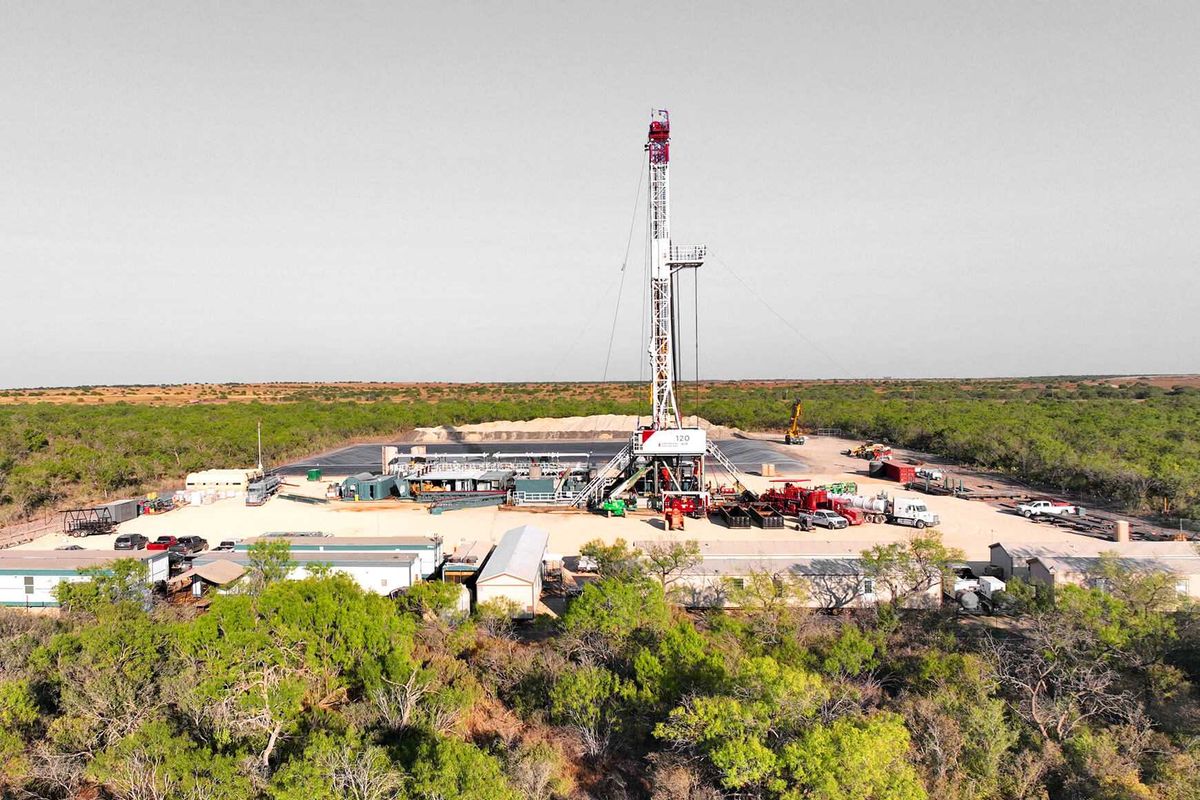
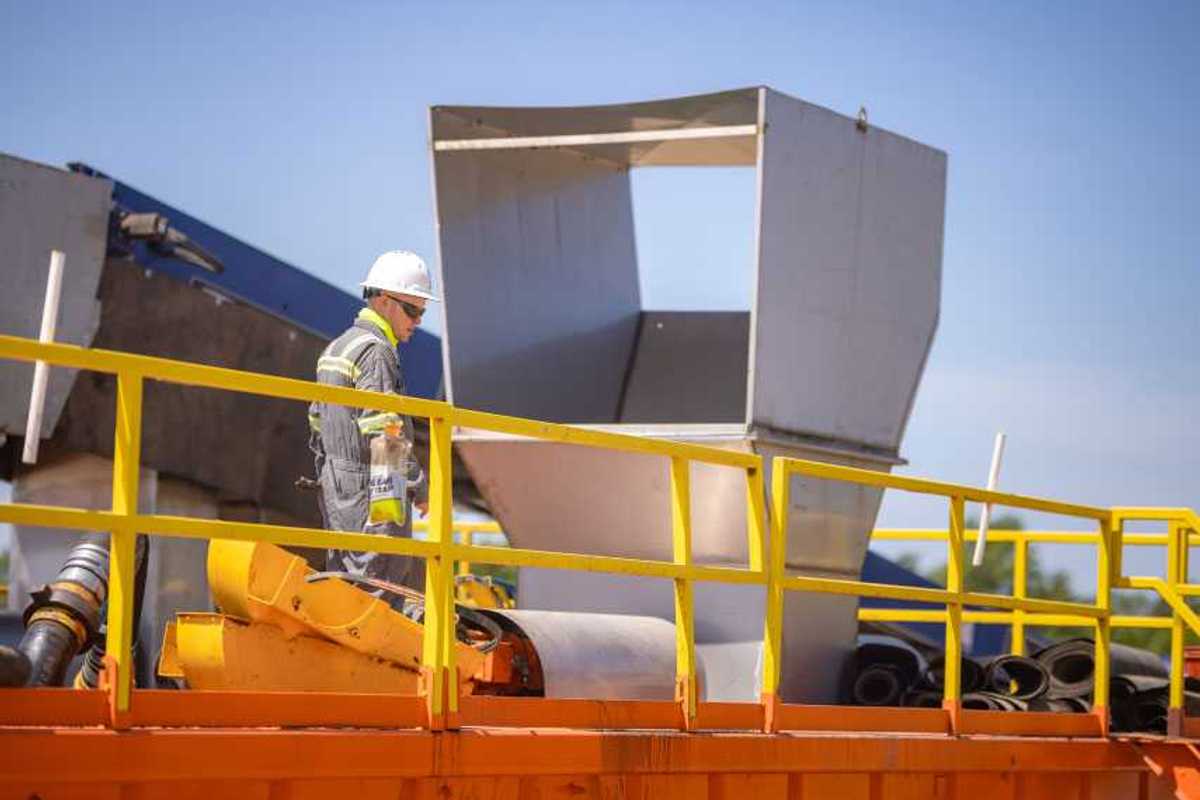
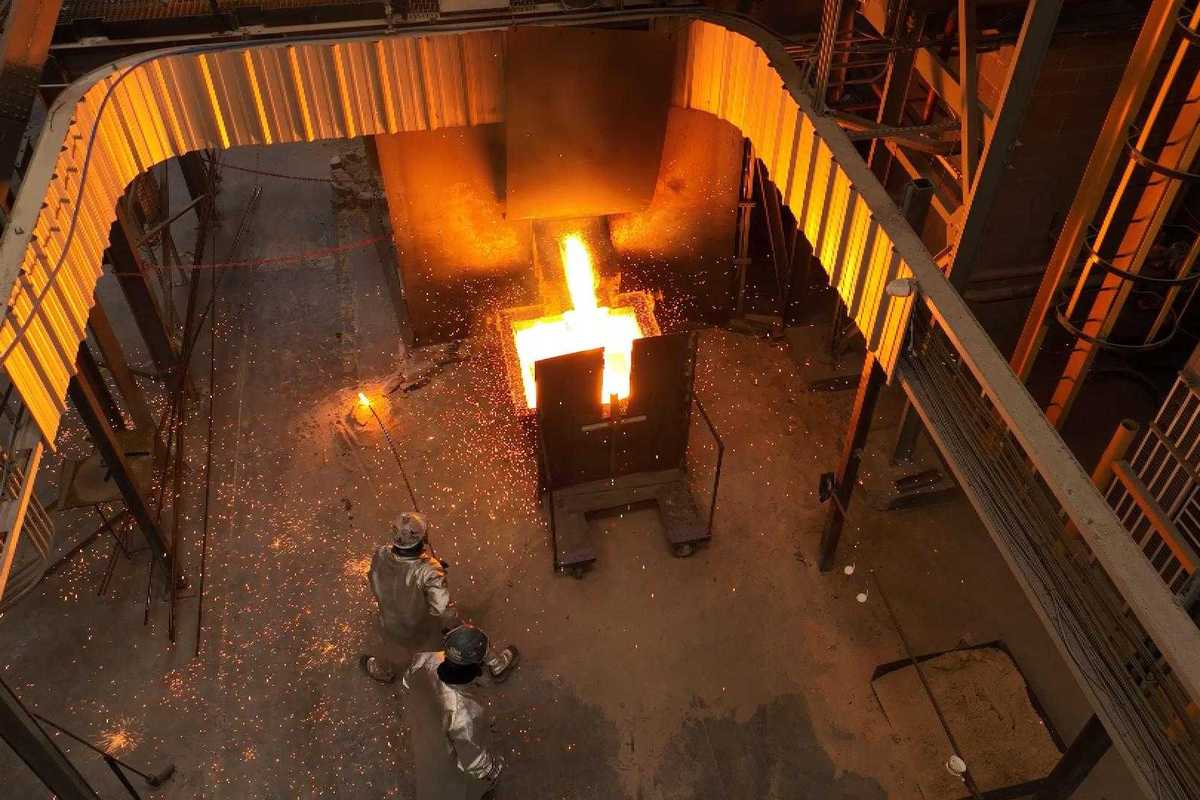
Quaise Energy is developing Project Obsidian, a superhot geothermal plant in central Oregon. Rendering via quaise.com.

Houston-based Quaise Energy is looking to raise $200 million to support the development of a 50-megawatt superhot geothermal plant in Oregon.

The company is seeking $100 million in Series B funding, plus an additional $100 million from grants, debt and project-level finance, a representative from the company tells Energy Capital. Axios first reported the news late last month.

Quaise specializes in terawatt-scale geothermal power. It is known for its millimeter-wave drilling technology, which was developed at MIT.

The company's Project Obsidian development in central Oregon will combine conventional drilling with its millimeter-wave technology. Quaise says the project, targeted to come online in 2030, could be the first commercial plant to operate in superhot rock, a more efficient and abundant resource, but one that requires more advanced and durable drilling technology.

Quaise says Obsidian would initially generate 50 megawatts of "always-on" power and would be designed to add 200 megawatts as additional wells are developed. A power-purchase deal has already been signed for the initial 50 megawatts with an undisclosed customer.

A representative from the company says Quaise would also use the funding to continue advancing its millimeter-wave technology and prepare it for commercialization.

Last year, the company drilled to a depth of about 330 feet using its millimeter-wave technology at its field site in Central Texas.

“Our progress this year has exceeded all expectations,” Carlos Araque, CEO and president of Quaise Energy, said at the time. “We’re drilling faster and deeper at this point than anyone believed possible, proving that millimeter-wave technology is the only tool capable of reaching the superhot rock needed for next-generation geothermal power. We are opening up a path to a new energy frontier.”

Canary Media reports that Quaise plans to drill to nearly 3,300 feet later this year and to deploy its millimeter-wave technology at its power plant in 2027.

Quaise raised $21 million in a Series A1 financing round in 2024 and a $52 million Series A in 2022. Major investors include Prelude Ventures, Safar Partners, Mitsubishi Corporation, Nabors Industries, TechEnergy and others.

Quaise was one of eight Houston-area companies to appear on Time magazine and Statista’s list of America’s Top GreenTech Companies of 2025.

Ad Placement 300x100
Ad Placement 300x600

CultureMap Emails are Awesome

Rice, UH launch joint effort to accelerate plastics recycling solutions

plastics partnership

Institutes at two Houston universities are joining forces to help position the city as a global leader in plastics recycling innovation.

The Center for Energy Studies (CES) at Rice University’s Baker Institute for Public Policy and the University of Houston’s Energy Transition Institute (UH-ETI) have announced a strategic partnership that aims to develop real-world solutions for plastic recycling.

The universities will kick off the new initiative with the Annual Sustainability Summit: Innovations and Collaborations in Circularity & Supply Chain Resilience event April 22 at the Baker Institute.

“Houston sits at the center of the global plastics and petrochemical value chain, which makes it uniquely positioned to lead in circular solutions,” Rachel Meidl, deputy director of CES, said in a news release. “This partnership is about moving beyond theory and bringing together data, policy and industry insight to accelerate technologies and frameworks that can scale.”

The partnership—which was made official during CERAWeek—will integrate policy, economics, science and engineering. The universities will work to “share data, insights, networks and connections to advance global work in protecting the environment, economy and society,” according to a news release from Rice.

Initially, the universities will focus on evaluating scalable advanced recycling pathways, developing policy frameworks to improve plastics circularity, analyzing emerging technology and using industry stakeholders for deployment.

Plastics circularity aligns with Rice and UH’s energy transition efforts to advance a circular economy. UH's ETI recently published a white paper that analyzes how the U.S. currently handles plastics recycling and advocates for a new approach. Ramanan Krishnamoorti, author of the paper and vice president of energy and innovation at UH, said the partnership with Rice’s Baker Institute could help bring some of the ideas outlined in the paper to reality.

“Our research has shown that a uniform approach may be the best way for the U.S. to tackle plastic waste,” Krishnamoort said in a news release. “By partnering with Rice’s Baker Institute for Public Policy, we will be better positioned to deliver real-world solutions that advance a circular plastics economy.”

Fervo Energy adds former eBay CEO Meg Whitman, other leaders to board

power players

As it prepares for a highly anticipated IPO, Houston-based geothermal power provider Fervo Energy has added four heavyweights to its board of directors.

The most notable new board member is Meg Whitman, former CEO of eBay, Hewlett-Packard, and Spring-based HPE, and former U.S. ambassador to Kenya. She joined the Fervo board as lead independent director.

One of the other high-profile new board members at Fervo is Jessica Uhl. She was chief financial officer of Shell from 2017 to 2022 and spent a little over a year as president of GE Vernova, a GE energy spinoff. She is a former board member of GE, Goldman Sachs and Shell. Today, Uhl advises investment firms on energy matters.

Another energy industry veteran, Trey Lowe, also joined the Fervo board. Lowe is senior vice president and chief technology officer at oil and gas producer Devon Energy, a Fervo investor that’s moving its headquarters from Oklahoma City to Houston. Before Devon, Lowe worked in the U.S. and Norway for Houston-based energy technology company SLB.

The fourth new director at Fervo is Robert Keehan, who spent 37 years at professional services firm PwC. He most recently was PwC’s chief global auditor and earlier was a partner in the firm’s energy practice.

Keehan and Uhl will serve as independent directors, which are non-executive governance and oversight roles, while Lowe is a non-independent director, which is a more hands-on role.

With the four new directors, Fervo has seven board members.

The arrival of the four new board members comes at a monumental time for Fervo, a provider of utility-scale geothermal energy:

“Energy markets are demanding dependable, carbon-free power at an unprecedented scale, and Fervo is uniquely positioned to supply it,” Tim Latimer, co-founder and CEO of Fervo, said in December.