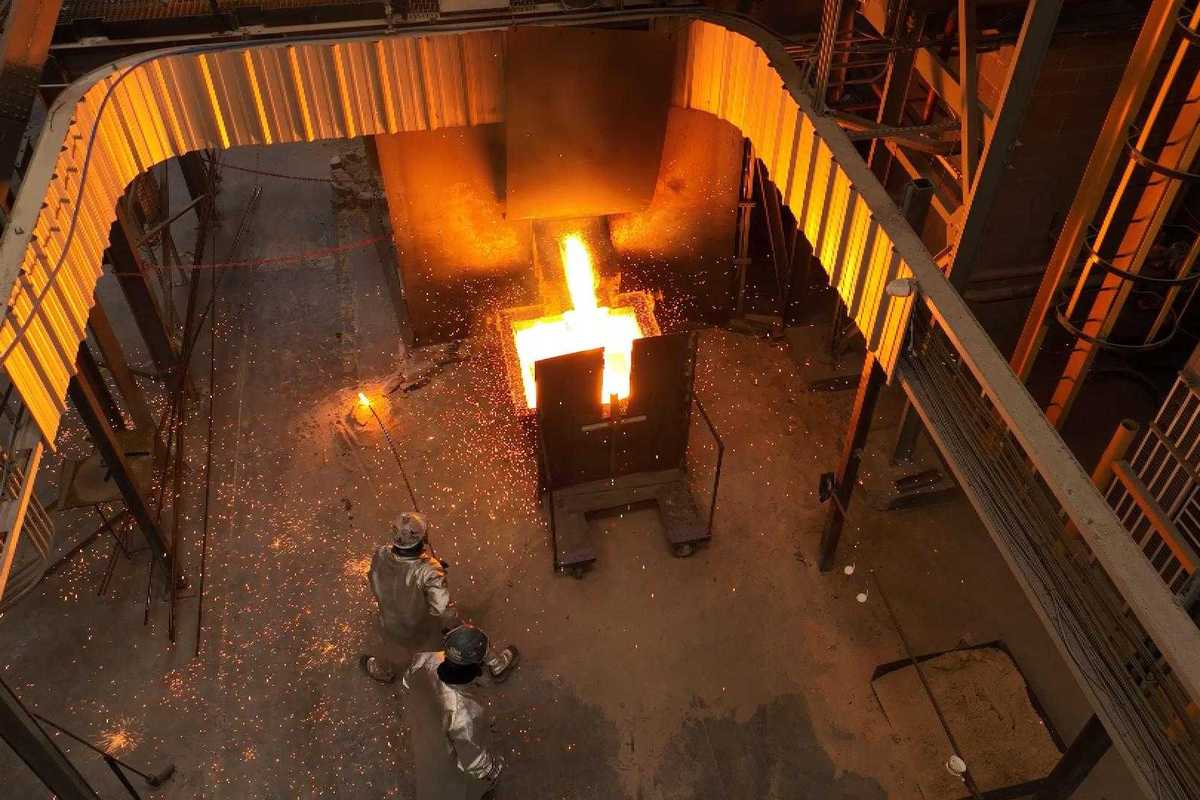
SLB and NVIDIA plan to build an "AI factory for energy" to help the industry transform massive amounts of data into actionable information. Photo courtesy SLB

Houston-based energy technology company SLB has expanded its 18-year tech collaboration with chipmaker NVIDIA to include the development of an “AI factory for energy.”

Through their partnership, SLB and NVIDIA will create AI infrastructure and models built around SLB’s existing digital platforms to help energy companies scale AI for data and operations.

In addition to the development of the “AI factory,” SLB will:

  • Provide modular design services to enhance NVIDIA’s blueprint for building, launching and operating gigawatt-scale AI data centers. In this case, modular design involves manufacturing data center components off-site.
  • Use NVIDIA’s AI infrastructure to improve the processing of large datasets and AI models across SLB’s digital platforms.

Energy companies generate vast amounts of operational data, which can slow down and silo decision-making, SLB says. By combining NVIDIA’s Omniverse libraries and its Nemotron open models with SLB’s digital and AI platforms, the companies aim to more rapidly transform data into actionable insights.

Omniverse libraries are sets of prebuilt 3D elements, such as objects, surfaces and interactive features, that make it easier to construct detailed virtual spaces without having to design everything manually. They’re commonly used for building immersive environments, digital replicas of real-world systems and simulation scenarios.

Nemotron open models are AI models that are freely available to download and modify. Instead of relying on a hosted service, you can run them on your own infrastructure and tailor them to fit specific needs.

Vladimir Troy, vice president of AI infrastructure at NVIDIA, says the energy sector is at the forefront of AI driving a “new industrial revolution.”

“The winners in AI will be companies with the best data, the deepest domain expertise, and the ability to scale,” Demos Pafitis, SLB’s chief technology officer, added. “By collaborating with NVIDIA to advance modular data center construction and harness our domain expertise and digital platforms, we’re enabling the energy industry to deploy AI at scale and transform operational data into smarter decisions.”
Ad Placement 300x100
Ad Placement 300x600

CultureMap Emails are Awesome

8+ must-attend Houston energy transition events in October 2026

Must-Attend Meetings

Editor's note: October is here, and there are many energy events to plug into in Houston this month. From summits and forums to exhibitions and networking opportunities, these are the top events to put on your calendar. Learn more below, and register now.

Oct. 6-7: Hydrogen Americas Summit and Exhibition

Hydrogen Americas delivers an unparalleled opportunity to explore how hydrogen integrates with CCUS and other energy solutions under the new U.S. and Americas energy paradigm. This event moves to Houston in 2026, providing unmatched access to industry leaders and opportunities. The summit will include CCUS dedicated sessions integrated directly into the conference programming, providing deeper insights into carbon capture, utilization, and storage. Look forward to networking opportunities to connect with global suppliers, regional developers, and key policymakers.

This event begins Oct. 6 at George R. Brown Convention Center. Register here.

Oct. 6-7: Annual Energy Summit — Energy, Risk, and Geopolitics

The 10th annual energy summit is co-hosted by Baker Botts and the Center for Energy Studies at Rice University's Baker Institute. This year's summit, “Energy, Risk, and Geopolitics,” will explore how a changing geopolitical landscape and shifts in supply chain risks are impacting investment, innovation, and market dynamics. The two-day program will include discussions spanning petroleum and LNG markets, critical minerals, electricity reliability, AI, and power demand.

This event begins Oct. 6 at 7:30 am at James A Baker III Hall. The event will also be livestreamed. Register here.

Oct. 7: Industrial Data Forward Forum 2026

Houston continues to sit at the intersection of energy, chemical production, and advanced manufacturing. Industrial data experts, automation engineers, and enterprise architects will gather for this one-day forum to address one of the region's biggest operational challenges: modernizing massive, legacy industrial plants without incurring high costs.

This event takes place Oct. 7 at Norris Conference Center. Register here.

Oct. 14: Houston Engineering, Energy & Transportation Networking Event

Connect with leading engineers, energy experts, environmental innovators, and transportation professionals during an evening of collaboration, insight, and opportunity. This exclusive event is designed for engineers, project developers, renewable energy specialists, urban planners, environmental consultants, and infrastructure leaders eager to expand their networks, exchange ideas, and explore solutions driving the future of sustainable development.

This event takes place on Oct. 14 at 7 pm at SOHO Garden. Get tickets here.

Oct. 14: Future of Global Energy Conference

This October, the sixth annual Future of Global Energy Conference kicks off, convening influential leaders from across energy, technology, finance and public policy who will come together to explore the forces defining the next era of global energy and Houston’s role in shaping it. Ryan Lance, Executive Chairman of ConocoPhillips and 2027 Chair of the Greater Houston Partnership’s Board of Directors, is the keynote speaker, bringing a global perspective on rising demand, market volatility and Houston’s role in the next era of energy growth.

This event takes place Oct. 14 at Marriott Marquis. Register here.

Oct. 17: Energy Day 2026

Energy Day Houston is the nation’s largest free, family-friendly STEM festival. It features over 50 interactive exhibits and live demonstrations focused on traditional and emerging energy career paths to power up your curiosity.

This event begins at 11 am on Oct. 17 at Sam Houston Park. Get details here.

Oct. 22: Geophysical Society of Houston Fall Forum

This one-day event will explore how geophysics continues to drive value in hydrocarbon development while opening new opportunities in geothermal, critical minerals, mining, microseismic monitoring, and other emerging subsurface applications. The forum will highlight both the technologies and business strategies needed to succeed in a rapidly evolving energy landscape.

This event begins at 7 am on Oct. 22 at SLB. Get details here.

Oct. 28-29: Energy Council Houston 2026

Energy Council Houston is a private executive forum for leaders across the U.S. upstream oil and gas sector. Over two days, operators, investors, financiers, and strategic partners will come together to discuss the issues shaping capital allocation, energy security, M&A activity, and energy investment across North America.

This event begins Oct. 28 at the Four Seasons Hotel Houston. Register here.

Houston geothermal company picks Nevada site for commercial-scale project

coming soon

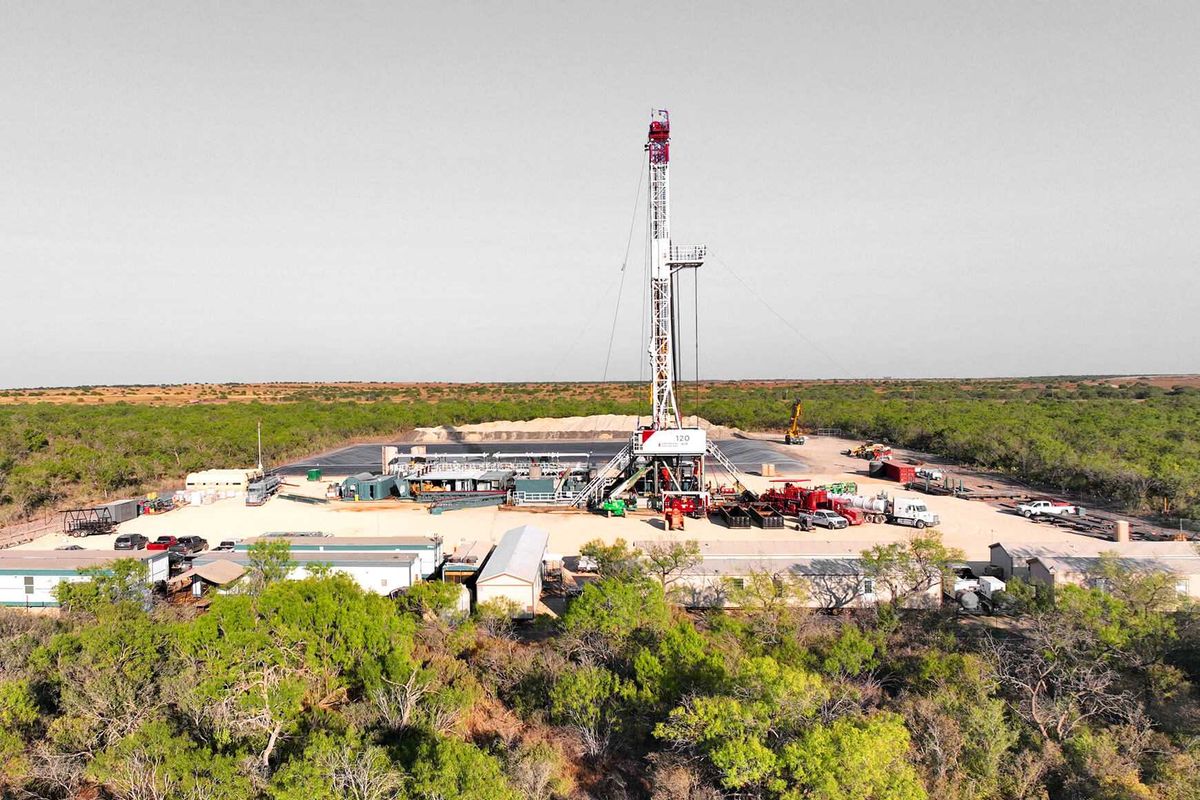
Sage Geosystems, a Houston-based developer of geothermal power systems, has chosen a site in Nevada for its commercial-scale Project Vector facility.

The company’s two-well enhanced geothermal system (EGS) will deliver around-the-clock geothermal heat to Ormat Technologies’ Blue Mountain geothermal power plant in Winnemucca, Nevada.

The startup expects to begin drilling the first well later this year, with the first electricity to be generated in 2027 and full-scale production to start in 2028.

In the Nevada system, fluid will circulate through an engineered subsurface reservoir, absorb heat from the surrounding rock and return heat to the surface. The heat will be delivered to the Blue Mountain plant for conversion into electricity.

Project Vector builds on the performance of Sage’s SMECI facility in South Texas. That facility’s results, combined with Sage’s digital twin platform, will be used to shape to the design and development of Project Vector.

Project Vector supports Sage’s growing commercial pipeline, including a 150-megawatt geothermal power agreement with Meta Platforms, the parent company of Facebook and Instagram.

“Blue Mountain is an ideal location for Sage to take the next step in continuing to commercialize our proprietary EGS approach,” Jason Peart, chief operating officer at Sage, said in a release. “By delivering geothermal heat into an existing power plant, Project Vector can demonstrate the model for bringing firm, 24/7 geothermal power to market at scale.”

Project Vector extends Sage’s relationship with Ormat.

In August 2025, Sage and Ormat agreed to accelerate commercialization of Sage’s geothermal technology at an Ormat power plant. This January, Ormat co-led Sage’s $97 million Series B funding round.

Sage, founded in 2020, has raised about $159 million across three funding rounds.

As the startup ramps up its ESG platform, Sage is targeting data centers as customers, among other large-scale users of electricity.

“The energy needs are huge, and they need it now,” CEO Cindy Taff said on Data Center Frontiers’ podcast. “They can’t depend on the grid anymore.”

Houston’s power advantage: Key takeaways from 2026 HETI Power Summit

The view from heti

Power has become a defining economic development issue as electricity demand rises across Texas.

Industrial expansion, advanced manufacturing, AI and data center growth are increasing the importance of reliable, affordable power delivered on the timelines major projects require.

The 2026 HETI Power Summit, titled Houston’s Power Advantage: Competing for Large-Load Growth, brought together leaders from utilities, power producers, large energy customers, technology and infrastructure providers, professional services firms and the public sector to examine how Houston can meet this moment.

Across keynotes, research report-outs, panel discussions and a fireside chat, a consistent theme emerged: Houston’s power advantage comes from the region’s ability to align utilities, customers, infrastructure, flexible demand, emerging solutions and regional partners around reliable, affordable and timely growth.

Reliability and Readiness

Public Utility Commission of Texas Commissioner Kathleen Jackson opened the summit by emphasizing reliability as the foundation for continued growth as Texas electricity demand rises.

Commissioner Jackson underscored the importance of sustained planning and investment to support new industrial, manufacturing and digital demand while maintaining a reliable power system. Remarks framed the morning’s broader discussion of how Houston can pair reliability with speed, affordability and long-term system readiness.

Scott Cockerham of FTI Consulting previewed HETI and FTI’s “Texas Power Market & Industry Assessment”. The research identifies accessibility, reliability, affordability, market flexibility and infrastructure readiness as key dimensions of regional competitiveness.

Leaders from FTI Consulting, Kroll, AWS and Constellation also discussed factors shaping major investment decisions, including reliability, infrastructure timelines, cost certainty, site readiness, community support and regional coordination.

For large customers, these factors must translate into credible project-level execution. Confidence in system performance, energization timelines and infrastructure plans can materially influence major capital commitments.

Building for the Houston We Want to Become

Jason Ryan of CenterPoint Energy challenged participants to plan now for the infrastructure needed to support Houston’s next phase of growth. Drawing on the idea that “what got you here won’t get you there,” Ryan urged the region to build infrastructure for “the Houston we want to become” and stay ahead of large-load demand.

A fireside discussion between CenterPoint Energy and Foxconn brought that challenge to the customer level. The conversation explored how early coordination between utilities and large customers can help advanced manufacturing projects move from site selection and planning to construction and operation.

Long-term growth will require continued investment in generation, transmission and distribution. In the near term, better use of existing infrastructure can create additional capacity.

HETI also shared findings from its Role of Efficiency & Demand Response to Meet Near-Term Regional Power Demand report. Energy efficiency can lower baseline electricity use, while demand response can shift or reduce demand during critical periods. Combined with supply-side investment, these tools can create grid headroom as longer-term infrastructure advances.

The summit’s closing panel, featuring leaders from Amperon, Enchanted Rock, EY and Quanta Services, expanded the discussion to emerging solutions. Panelists explored modular and flexible generation, advanced forecasting, grid intelligence and greater coordination among utilities, customers, infrastructure providers and communities.

Houston’s broader regional power landscape adds another dimension. Entergy Texas President and CEO Eli Viamontes described Southeast Texas as experiencing an “extraordinary trifecta of residential, industrial and data center growth.” His remarks highlighted how the MISO-facing portion of the region complements Houston’s ERCOT strengths through utility planning, generation and infrastructure investment, resource adequacy and coordination with major industrial customers.

Together, these approaches point to a broader strategy: invest for long-term demand while using flexibility, technology and regional coordination to create capacity for growth today.

From Power Advantage to Economic Advantage

Taken together, the Power Summit discussions point to a clear priority for Houston: translating power market and infrastructure strengths into coordinated execution.

Priority areas include earlier infrastructure planning, stronger site and project readiness, clearer pathways from projected demand to reliably served load, expanded efficiency and flexibility, and sustained coordination among utilities, customers, policymakers, communities, technology providers and economic development organizations.

HETI is advancing this work through research and convening efforts focused on Houston’s evolving power needs and economic competitiveness.

The 2026 Power Summit reinforced Houston’s strong foundation for power-intensive growth and the importance of aligning investment, reliability, flexibility and regional coordination around the next generation of economic opportunity.

———

This article originally appeared on the Greater Houston Partnership's Houston Energy Transition Initiative blog. HETI exists to support Houston's future as an energy leader. Gain more insights from HETI’s Energy Efficiency and Demand Response Report.