








Editor's note: The top energy transition news for the first half of May 2025 includes two global energy projects with Houston ties. Plus, we look at Houston's new Climate Justice Plan. Get the details on EnergyCapitalHTX's most-read stories below.
1. China-based company to launch its largest U.S. energy storage project in Houston
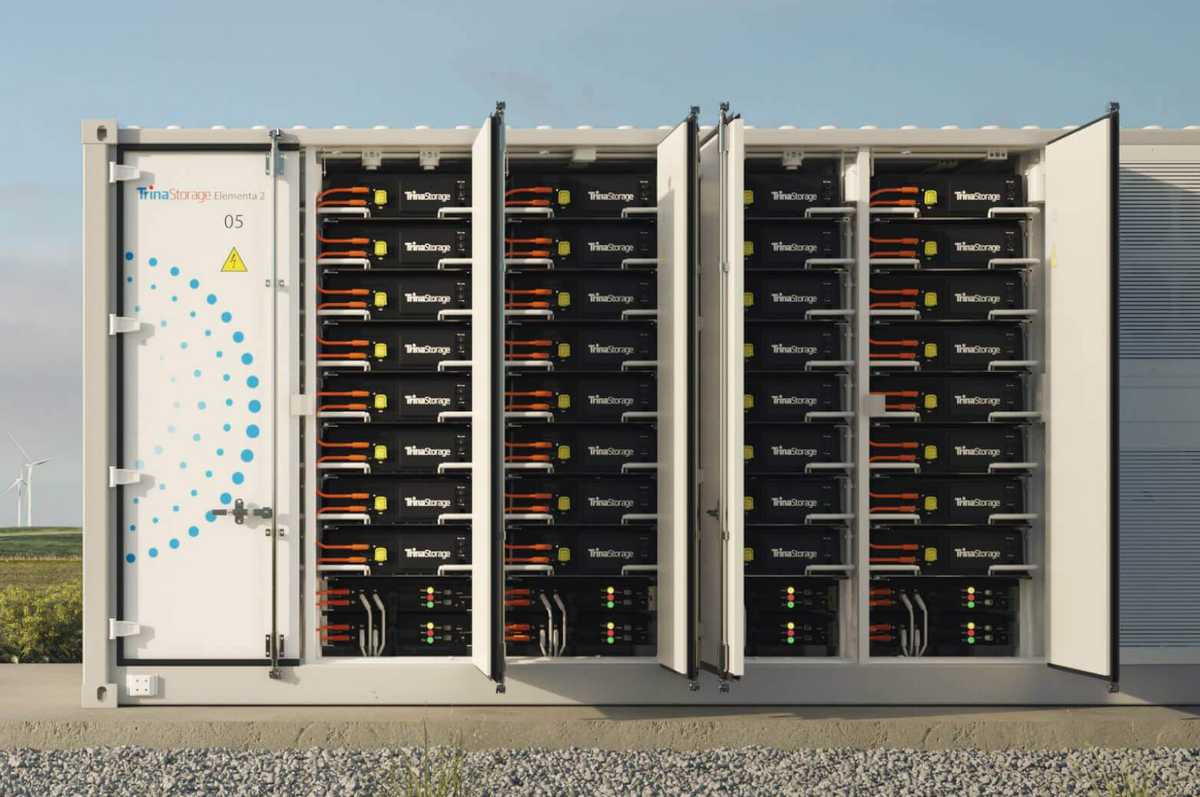
China-based Trina Storage is starting its U.S. expansion in Houston. Photo via trinasolar.com
Trina Storage and FlexGen, a North Carolina-based company that develops integrated energy storage systems, are bringing a 371-megawatt battery energy storage system to Houston. The project will be the largest grid-scale deployment project in North America by Trina Storage, which is a business unit of China-based Trina Solar.
"This project is a testament to Trina Storage's ability to provide a fully bankable, integrated energy storage solution that meets the evolving needs of the market," Terry Chen, vice president of Trina Storage North America, said.
"As our first grid-scale deployment in North America, this achievement reflects the industry's confidence in our technology and our commitment to de-risking energy storage investments and supporting the energy transition in the region." Continue reading.
2. Houston climatech company signs on to massive carbon capture project in Malaysia
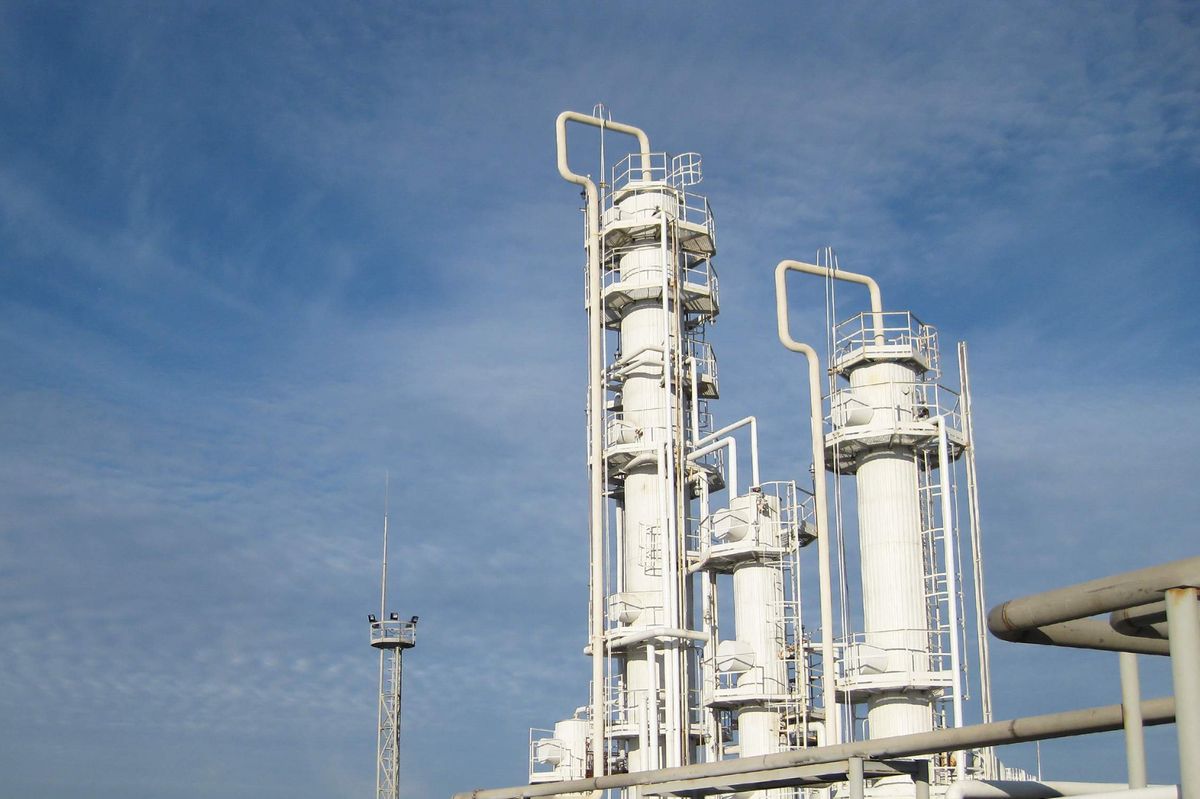
HYCO1 has signed an agreement to convert 1 million tons per year of raw CO2 into industrial-grade syngas at a new carbon capture project in Malaysia. Photo via Getty Images.
Houston-based CO2 utilization company HYCO1 has signed a memorandum of understanding with Malaysia LNG Sdn. Bhd., a subsidiary of Petronas, for a carbon capture project in Malaysia, which includes potential utilization and conversion of 1 million tons of carbon dioxide per year.
The project will be located in Bintulu in Sarawak, Malaysia, where Malaysia LNG is based, according to a news release. Malaysia LNG will supply HYCO1 with an initial 1 million tons per year of raw CO2 for 20 years starting no later than 2030. The CCU plant is expected to be completed by 2029.
"This is very exciting for all stakeholders, including HYCO1, MLNG, and Petronas, and will benefit all Malaysians," HYCO1 CEO Gregory Carr said. "We approached Petronas and MLNG in the hopes of helping them solve their decarbonization needs, and we feel honored to collaborate with MLNG to meet their Net Zero Carbon Emissions by 2050.” Continue reading.
3. Oxy opens energy-focused innovation center in Midtown Houston
 The Oxy Innovation Center is now open at the Ion in Houston, and a new coworking space launches this week. Photo courtesy of the Ion
Houston-based Occidental officially opened its new Oxy Innovation Center with a ribbon cutting at the Ion last month.
The opening reflects Oxy and the Ion's "shared commitment to advancing technology and accelerating a lower-carbon future," according to an announcement from the Ion.
Oxy, which was named a corporate partner of the Ion in 2023, now has nearly 6,500 square feet on the fourth floor of the Ion. Continue reading.
4. Harris County looks to future with new Climate Justice Plan

Harris County commissioners approved a plan that seeks to address issues of ecology, infrastructure, economy, community and culture. Photo via Getty Images.
Harris County commissioners approved a five-point Climate Justice Plan last month with a 3-1 vote by Harris County commissioners. The plan was created by the Office of County Administration’s Office of Sustainability and the nonprofit Coalition for Environment, Equity and Resilience.
“Climate action planning that centers on justice has the potential to spark innovative thinking and transformative actions that will lead to meaningful and just transitions in communities, policies, funding mechanisms, and implementation strategies,” the 59-page report reads.
The plan seeks to address issues relating to ecology, infrastructure, economy, community and culture. Continue reading.
5. Houston company completes orphan well decommission project in the Gulf

Promethean Energy had completed a significant decommissioning project in the Matagorda Island area. Photo via Getty Images.
Houston-based Promethean Energy announced this month that it has successfully decommissioned offshore orphaned wells in the Matagorda Island lease area.
Around this time last year, the company shared that it would work on the temporary abandonment of nine orphan wells on behalf of the Department of Interior's Bureau of Safety and Environmental Enforcement, or BSEE, in the area. Promethean is known for decommissioning mature assets in a cost-effective and environmentally sustainable manner.
“Our team is incredibly proud to have completed this critical work efficiently, safely, and ahead of budget,” Steve Louis, SVP of decommissioning at Promethean Energy, said. “By integrating our expertise, technologies and strategic partnerships, we have demonstrated that decommissioning can be both cost-effective and environmentally responsible.” Continue reading.
 Rheom's Benree material was used for a high-heel prototype. Photo courtesy Rheom Materials