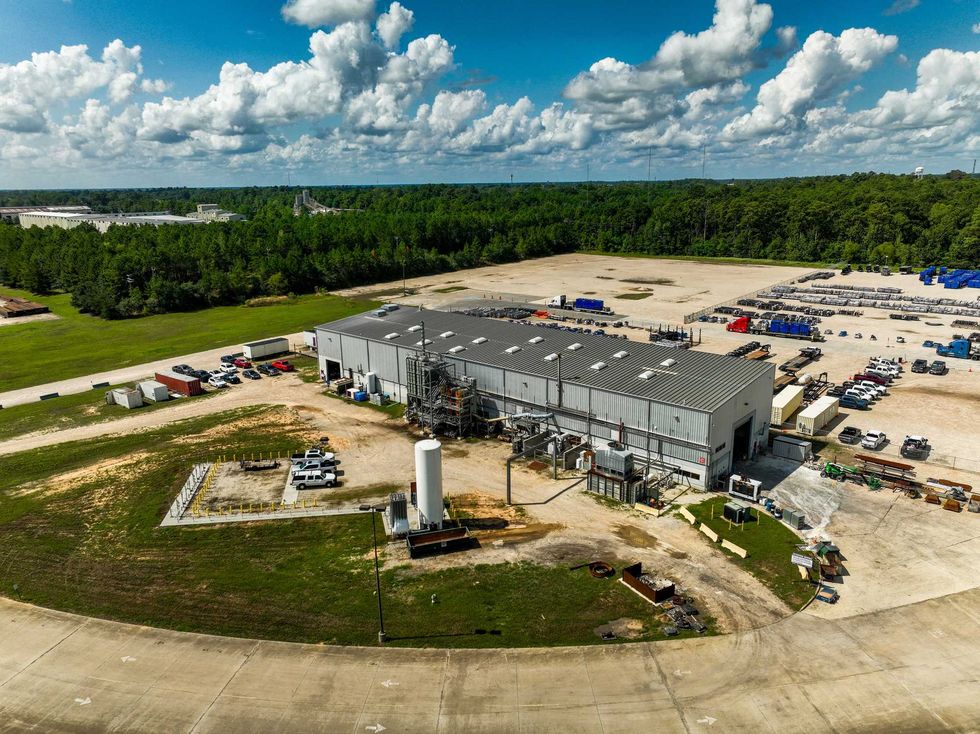
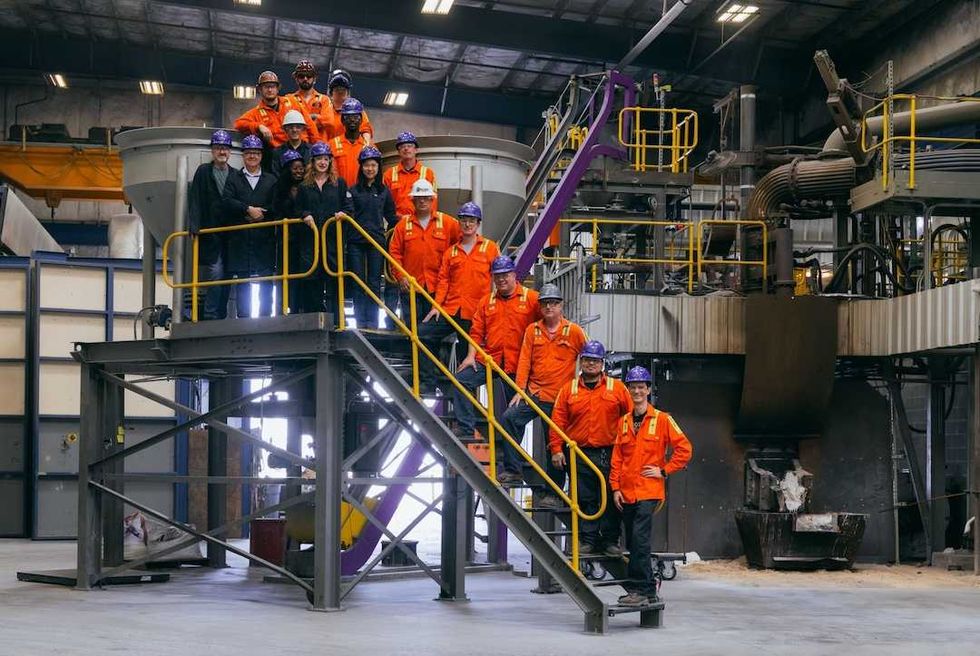
Greentown Labs has named its Go Make 2026 cohort. Photo courtesy Greentown Labs

Greentown Labs has named five climatech startups to its Go Make 2026 cohort, including one from Houston.

Greentown Go Make 2026 is in partnership with Shell Catalysts & Technologies and Technip Energies. Startups will be able to collaborate with leadership from Shell and Technip and have opportunities to work directly with their process engineering teams and develop potential partnerships, pilots and demonstrations, according to Greentown.

This year's manufacturing cohort focuses specifically on process technology and catalytic innovations, which, according to Greentown, have the potential to be a "critical enabler of the global energy transition." Greentown shares that 90 percent of chemical processes depend on catalysis, but traditional methods rely on fossil fuels and consume significant amounts of energy.

“Catalysis underpins the majority of industrial chemical processes, which together account for a significant share of global emissions, making it a critical lever for reducing carbon intensity while improving performance,” Georgina Campbell Flatter, CEO of Greentown, said in a news release. “Greentown Go Make 2026 is designed to close the gap between breakthrough innovation and industrial deployment. By connecting startups with Shell and Technip Energies’ technical expertise and global scale, we’re helping accelerate solutions that improve efficiency and drive industrial decarbonization.”

The five Greentown Go Make 2026 companies include:

  • Houston-based Biosimo, which makes scalable biochemicals from ethanol
  • Missouri-based Catalyxx, which transforms bioethanol into drop-in, cost-competitive, carbon-negative chemicals
  • Sydney, Australia-based HydGene Renewables, which produces low-carbon hydrogen and industrial chemicals from waste biomass
  • Switzerland-based TreaTech, which turns waste into renewable gas, water and minerals through catalytic hydrothermal gasification
  • California-based Unifuel, which has developed a chemical technology platform to make sustainable aviation fuel, renewable gasoline and other renewable chemicals

The cohort will be celebrated at a kickoff event in Houston at The Ion on June 9.

In addition to Greentown Go Make, Greentown also runs its Go Move (transportation), Go Energize (energy and electricity), Go Build (buildings), and Go Grow (food and agriculture) cohort-based programs. The climatech incubator announced its Go Build 2026 cohort in March. Read more here.

Ad Placement 300x100
Ad Placement 300x600

CultureMap Emails are Awesome

UH study finds Gulf Coast best positioned for emerging carbon removal technology

coastal impact

The Gulf Coast is an ideal spot for deploying a new ocean-based carbon removal technology that uses seawater to capture and store carbon dioxide, according to a new study from the University of Houston.

The study was led by UH Cullen College of Engineering Professor Mim Rahimi and published in Nature’s Communications Sustainability journal. Abdelrahman Refaie, a PhD student at UH, authored the paper. It aimed to develop a plan for implementing an electrochemical marine carbon dioxide removal (e-mCDR) technology that treats seawater to increase the ocean’s ability to absorb and store carbon dioxide from the air.

Currently, oceans absorb about 30 percent of human-produced carbon dioxide emissions each year, according to UH, making it a great natural resource for carbon removal.

The team at UH scouted and analyzed 38 coastal facilities across the U.S.—including power plants, desalination plants, and liquefied natural gas (LNG) terminals—before determining the Gulf Coast as an attractive option. The South Hub, or the Gulf Coast along Texas and Louisiana, ranked the top-performing area for the technology due to the industrial infrastructure, affordable electricity, hydrogen transportation and storage networks.

Other regions like California and the Northeast also scored well due to their clean energy mix and carbon removal potential, according to UH.

“The South hub has one of the highest diversity factors between power plants, desalination and LNG,” Refaie said in a news release. “That means if, logistically, down the road LNG is not open for this implementation, then we have another option in the area. It reduces the risk factor.”

UH says the findings show how companies could commercialize the technology, which could boost coastal economies.

“The question we had wasn’t technical, rather, it was logistical in regard to implementation down the road,” Rahimi said. “This would be a roadmap if a company or the government wants to utilize this technology.”

Rahimi aims to increase awareness about e-mCDR technology and its potential impact. He recently discussed the ocean-centric carbon removal work with members of Congress in March at the Carbon to Sea’s 2026 Hill Day.

“I think faculty at the University of Houston can do more of this kind of work,” Rahimi said in a separate release. “Meeting with Members of Congress gives us a chance to help policymakers better understand the science and engineering happening at our university. That kind of engagement is an important part of moving new technologies forward. It also shows how the work we do on campus can have a real impact on communities beyond the university.”

Japanese company plans $357M solar manufacturing plant in Houston area

coming soon

Japanese solar manufacturing company TOYO Co. Ltd. plans to invest $357 million to bring a 1.5-gigwatt solar cell manufacturing facility to the Houston area.

TOYO’s latest state-of-the-art facility will be co-located at its existing solar module site in Humble, according to a news release from the company. It will produce heterojunction (HJT) solar cells, which are known to be more durable and efficient with a higher heat threshold.

TOYO reports that the new facility will create 400 full-time manufacturing jobs. The project is expected to be completed in 20 months, which includes an initial pilot production.

"Expanding into domestic cell manufacturing is the natural next step in our commitment to creating an integrated onshore solar supply chain from polysilicon to panels," Takahiko Onozuka, chairman and CEO of TOYO, said in the news release. "Co-locating 1.5 GW of HJT cell capacity at our Houston module site significantly optimizes our capital allocation and infrastructure spend.”

TOYO entered the Houston market in 2024 through its acquisition of a majority stake in Solar Plus Technology Texas LLC.

Earlier this year, it began producing solar modules at its 567,140-square-foot plant in Lovett Industrial’s Nexus North Logistics Park. At the time, the company said it planned to expand manufacturing capacity to 6.5 gigawatts.

"The new cell plant reflects TOYO's long-term strategy to build a fully FEOC-compliant domestic manufacturing platform focused on serving the needs of the U.S. utility-scale solar market," Rhone Resch, TOYO's chief strategy officer, added in the release. "By producing premium solar products in the United States, we will be well positioned to meet the market's evolving domestic content requirements while strengthening supply chain security and reliability. Looking ahead, we believe HJT is the optimal technology platform for integrating next-generation perovskite solar cells, which we expect will drive the next major advancement in solar conversion efficiency and support TOYO's long-term technology roadmap.”