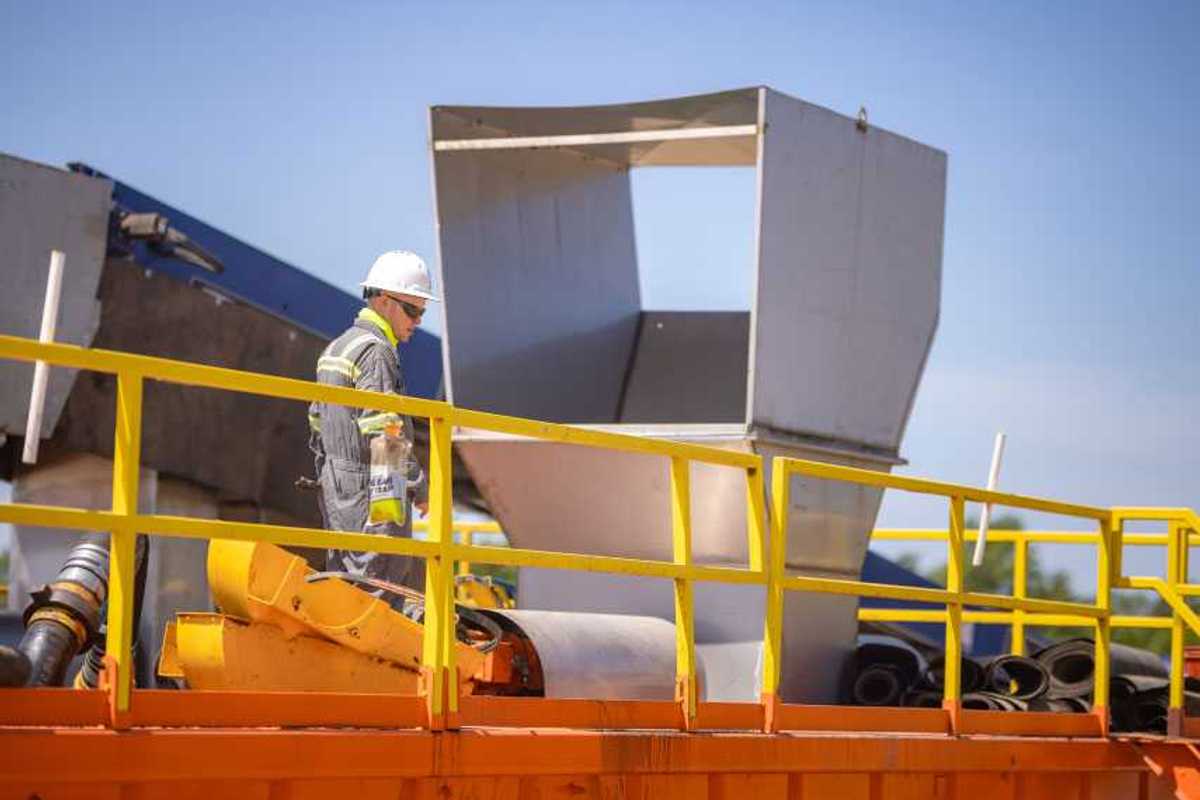
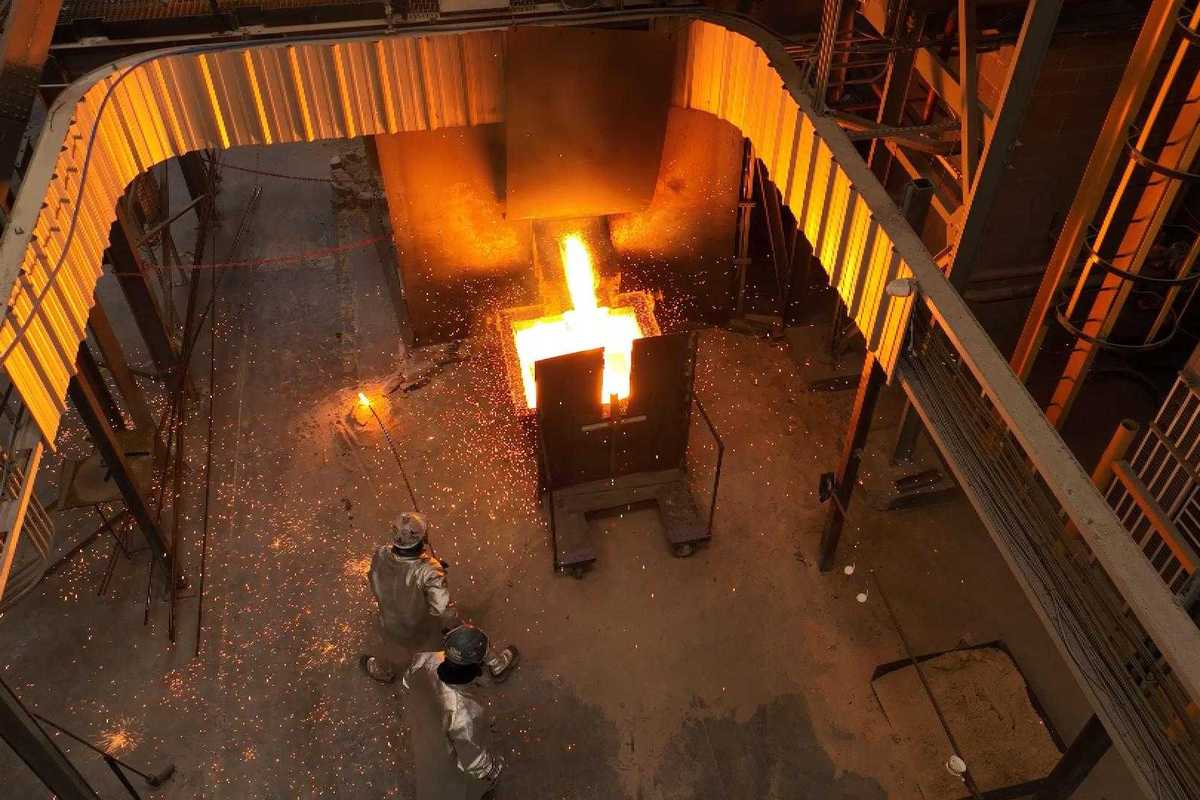
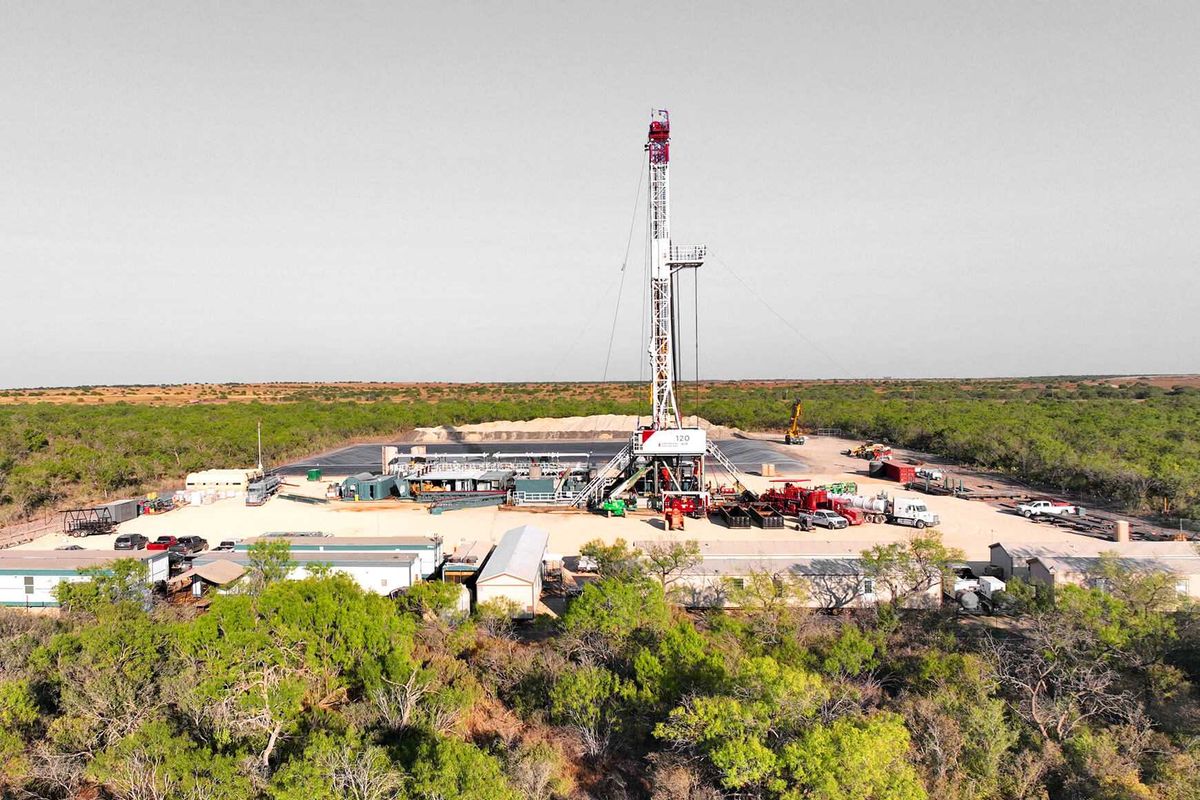
Onshore upstream meets greener pastures in the city where the earth meets the sky at URTeC 2023 in Denver. Photo via Shuttersock.

June 13-15 | Unconvetional Resources Technology Conference (URTeC)

Take a trip to higher ground and cooler temperatures next week at URTeC 2023 in Denver, Colorado. This technically focused event, hosted annually by the Society of Petroleum Engineers, American Association of Petroleum Geologists, and Society of Exploration Geophysicists, features the best and brightest minds in onshore oil and gas sharing novel applications of science and technology in pursuit of a more sustainable upstream energy base.

The event kicks off with almost two hours of discussion amongst industry leaders like Clay Gaspar, executive vice president and COO of Devon Energy, Amy Henry, CEO of Eunike Ventures, Robert E. Fast, CTO of Hess Corporation, and Neil McMahon, managing partner of Kimmeridge. The plenary panel will address the role of unconventionals in a lower carbon energy world, from tackling emissions to making advances in CCUS.

Chevron puts safety in the spotlight with a two-part session devoted to cleaner, more efficient engineering methodologies deployed to support corporate objectives while safely delivering higher returns and lower carbon. Hear from Vice President of the Rockies business unit, Kim McHugh, Johannes Alvarez, EOR and CO2 advisor for the Mid-Continent business unit, Vanessa Ryan, methane reduction manager of strategy and sustainability, and more leaders across Chevron building a new future for upstream energy.

Before the event wraps, be sure to catch an engaging discussion late Thursday morning with Christine Ehlig-Economides, professor and Hugh Roy & Lillie Cranz Cullen Distinguished University Chair at the University of Houston, on decarbonizing tight oil and shale gas, re-use opportunities for wastewater, and repurposed operations through closed-loop geothermal.

Registration currently remains open, with one- and three-day event options, as well as an exhibit hall-only option. The event usually draws over 3,000 attendees, so don’t wait to sign up.

For a complete list of upcoming energy events, visit the Events tab right here on EnergyCapitalHTX.com.

Ad Placement 300x100
Ad Placement 300x600

CultureMap Emails are Awesome

Tesla no longer world's biggest EV maker as sales drop for second year

EV Update

Tesla lost its crown as the world’s bestselling electric vehicle maker as a customer revolt over Elon Musk’s right-wing politics, expiring U.S. tax breaks for buyers and stiff overseas competition pushed sales down for a second year in a row.

Tesla said that it delivered 1.64 million vehicles in 2025, down 9% from a year earlier.

Chinese rival BYD, which sold 2.26 million vehicles last year, is now the biggest EV maker.

It's a stunning reversal for a car company whose rise once seemed unstoppable as it overtook traditional automakers with far more resources and helped make Musk the world's richest man. The sales drop came despite President Donald Trump's marketing effort early last year when he called a press conference to praise Musk as a “patriot” in front of Teslas lined up on the White House driveway, then announced he would be buying one, bucking presidential precedent to not endorse private company products.

For the fourth quarter, Tesla sales totaled 418,227, falling short of even the much reduced 440,000 target that analysts recently polled by FactSet had expected. Sales were hit hard by the expiration of a $7,500 tax credit for electric vehicle purchases that was phased out by the Trump administration at the end of September.

Tesla stock fell 2.6% to $438.07 on Friday.

Even with multiple issues buffeting the company, investors are betting that Tesla CEO Musk can deliver on his ambitions to make Tesla a leader in robotaxi services and get consumers to embrace humanoid robots that can perform basic tasks in homes and offices. Reflecting that optimism, the stock finished 2025 with a gain of approximately 11%.

The latest quarter was the first with sales of stripped-down versions of the Model Y and Model 3 that Musk unveiled in early October as part of an effort to revive sales. The new Model Y costs just under $40,000 while customers can buy the cheaper Model 3 for under $37,000. Those versions are expected to help Tesla compete with Chinese models in Europe and Asia.

For fourth-quarter earnings coming out in late January, analysts are expecting the company to post a 3% drop in sales and a nearly 40% drop in earnings per share, according to FactSet. Analysts expect the downward trend in sales and profits to eventually reverse itself as 2026 rolls along.

Musk said earlier last year that a “major rebound” in sales was underway, but investors were unruffled when that didn't pan out, choosing instead to focus on Musk's pivot to different parts of business. He has has been saying the future of the company lies with its driverless robotaxis service, its energy storage business and building robots for the home and factory — and much less with car sales.

Tesla started rolling out its robotaxi service in Austin in June, first with safety monitors in the cars to take over in case of trouble, then testing without them. The company hopes to roll out the service in several cities this year.

To do that successfully, it needs to take on rival Waymo, which has been operating autonomous taxis for years and has far more customers. It also will also have to contend with regulatory challenges. The company is under several federal safety investigations and other probes. In California, Tesla is at risk of temporarily losing its license to sell cars in the state after a judge there ruled it had misled customers about their safety.

“Regulatory is going to be a big issue,” said Wedbush Securities analyst Dan Ives, a well-known bull on the stock. “We're dealing with people's lives.”

Still, Ives said he expects Tesla's autonomous offerings will soon overcome any setbacks.

Musk has said he hopes software updates to his cars will enable hundreds of thousands of Tesla vehicles to operate autonomously with zero human intervention by the end of this year. The company is also planning to begin production of its AI-powered Cybercab with no steering wheel or pedals in 2026.

To keep Musk focused on the company, Tesla’s directors awarded Musk a potentially enormous new pay package that shareholders backed at the annual meeting in November.

Musk scored another huge windfall two weeks ago when the Delaware Supreme Court reversed a decision that deprived him of a $55 billion pay package that Tesla doled out in 2018.

Musk could become the world's first trillionaire later this year when he sells shares of his rocket company SpaceX to the public for the first time in what analysts expect would be a blockbuster initial public offering.

Renewables to play greater role in powering data centers, JLL says

Data analysis

Renewable energy is evolving as the primary energy source for large data centers, according to a new report.

The 2026 Global Data Center Outlook from commercial real estate services giant JLL points out that the pivot toward big data centers being powered by renewable energy stems from rising electricity costs and tightening carbon reduction requirements. In the data center sector, renewable energy, such as solar and wind power, is expected to outcompete fossil fuels on cost, the report says.

The JLL forecast carries implications for the Houston area’s tech and renewable energy sectors.

As of December, Texas was home to 413 data centers, second only to Virginia at 665, according to Visual Capitalist. Dozens more data centers are in the pipeline, with many of the new facilities slated for the Houston, Austin, Dallas-Fort Worth and San Antonio areas.

Amid Texas’ data center boom, several Houston companies are making inroads in the renewable energy market for data centers. For example, Houston-based low-carbon energy supplier ENGIE North America agreed last May to supply up to 300 megawatts of wind power for a Cipher Mining data center in West Texas.

The JLL report says power, not location or cost, will become the primary factor in selecting sites for data centers due to multi-year waits for grid connections.

“Energy infrastructure has emerged as the critical bottleneck constraining expansion [of data centers],” the report says. “Grid limitations now threaten to curtail growth trajectories, making behind-the-meter generation and integrated battery storage solutions essential pathways for sustainable scaling.”

Behind-the-meter generation refers to onsite energy systems such as microgrids, solar panels and solar battery storage. The report predicts global solar capacity will expand by roughly 100 gigawatts between 2026 and 2030 to more than 10,000 gigawatts.

“Solar will account for nearly half of global renewable energy capacity in 2026, and despite its intermittent properties, solar will remain a key source of sustainable energy for the data center sector for years to come,” the report says.

Thanks to cost and sustainability benefits, solar-plus-storage will become a key element of energy strategies for data centers by 2030, according to the report.

“While some of this energy harvesting will be colocated with data center facilities, much of the energy infrastructure will be installed offsite,” the report says.

Other findings of the report include:

  • AI could represent half of data center workloads by 2030, up from a quarter in 2025.
  • The current five-year “supercycle” of data center infrastructure development may result in global investments of up to $3 trillion by 2030.
  • Nearly 100 gigawatts worth of new data centers will be added between 2026 and 2030, doubling global capacity.

“We’re witnessing the most significant transformation in data center infrastructure since the original cloud migration,” says Matt Landek, who leads JLL’s data center division. “The sheer scale of demand is extraordinary.”

Hyperscalers, which operate massive data centers, are allocating $1 trillion for data center spending between 2024 and 2026, Landek notes, “while supply constraints and four-year grid connection delays are creating a perfect storm that’s fundamentally reshaping how we approach development, energy sourcing, and market strategy.”

Houston-based NRG announces new CEO and succession plan

new leader

Houston-based NRG Energy Inc. announced Jan. 7 that it has appointed Robert J. Gaudette as president and CEO. Gaudette took over as president effective Jan. 7 and will assume the role of CEO April 30, coinciding with the company's next stockholder meeting.

Gaudette, who previously served as executive vice president and president of NRG Business and Wholesale Operations, will succeed Lawrence Coben in the leadership roles. Coben will remain an advisor to NRG through the end of the year and will also continue to serve as board chair until April 30. Antonio Carrillo, lead independent director at NRG, will take over as board chair.

"Rob has played a central role in strengthening NRG’s position as a leader in our industry through strategic growth, operational excellence, and customer-focused innovation," Coben said in the news release. "He is a strong, decisive leader with extensive knowledge of our business, markets, and customers. The Board and I are confident that Rob is the right person to lead NRG forward and take the NRG rocket ship to new heights. I can’t wait to see what comes next.”

Gaudette has been with NRG since 2001. He has served as EVP of NRG Business and Market Operations since 2022 and president of NRG Business and Market Operations since 2024. In these roles, he led NRG’s power generation and oversaw its portfolio of commercial and industrial products and services as well as its market operations, according to the company.

He has held various executive leadership roles at NRG. He earned his bachelor's degree in chemistry from The College of William and Mary and an MBA at Rice University, where he was a Jones Scholar. He also served four years as an Army officer.

“It is an honor to be appointed NRG’s next CEO at this transformative time for the energy sector and our company,” Gaudette said in the release. “With NRG’s electricity, natural gas and smart home portfolio, we are ideally positioned to meet America’s evolving energy needs. I am grateful to Larry and all my NRG colleagues, both past and present, who built our great company and positioned us for the future. I look forward to leading our incredible team to deliver affordable, resilient power for the customers and communities we serve, while creating substantial value for our shareholders.”

In addition to its traditional power generation and electricity businesses, NRG has been working to develop a 1-gigawatt virtual power plant by connecting thousands of decentralized energy sources by 2035 in an effort to meet Texas’ surging energy demands.

The company announced partnerships last year with two California-based companies to bolster home battery use and grow its network. NRG has said the VPP could provide energy to 200,000 homes during peak demand.