The new Pleasure Island Power Collective in Port Arthur is expected to generate 391 megawatts of clean power. Photo via unsplash.

Houston-based clean energy company Diligence Offshore Services has announced a strategic partnership with Florida-based floating solar manufacturing company AccuSolar for the development of a renewable energy project in the Port Arthur area.

Known as the Pleasure Island Power Collective, it will be built on 2,275 acres across Pleasure Island and Sabine Lake. It is expected to generate 391 megawatts of clean power, alongside a utility-scale battery energy storage system. It will also feature a 225-megawatt coastal onshore wind farm, with energy produced on-site used to power a data center for adaptive superintelligence, making it entirely self-sustained by renewable sources, according to the company.

AccuSolar will design and manufacture the project and power will be distributed through the Canaan Energy Corridor

“We are incredibly proud to partner with a fellow U.S. company like AccuSolar,” Harry C. Crawford III, founder and managing member of Diligence Offshore, said in a news release. “Their expertise in American manufacturing and floating solar technology is essential to the success of the Pleasure Island Power Collective.”

The project is expected to bring economic growth and a significant number of manufacturing jobs to the area during the construction phase and long-term operations.

Diligence Offshore is pursuing a DPA Title 1 DX rating under the Defense Production Act to help advance the project's development schedule, according to the release, which could lead to immediate manufacturing jobs.

“This partnership not only strengthens our domestic supply chain but also accelerates our vision to bring economic freedom and climate resilience to the Gulf Coast,” Crawford added in the release.

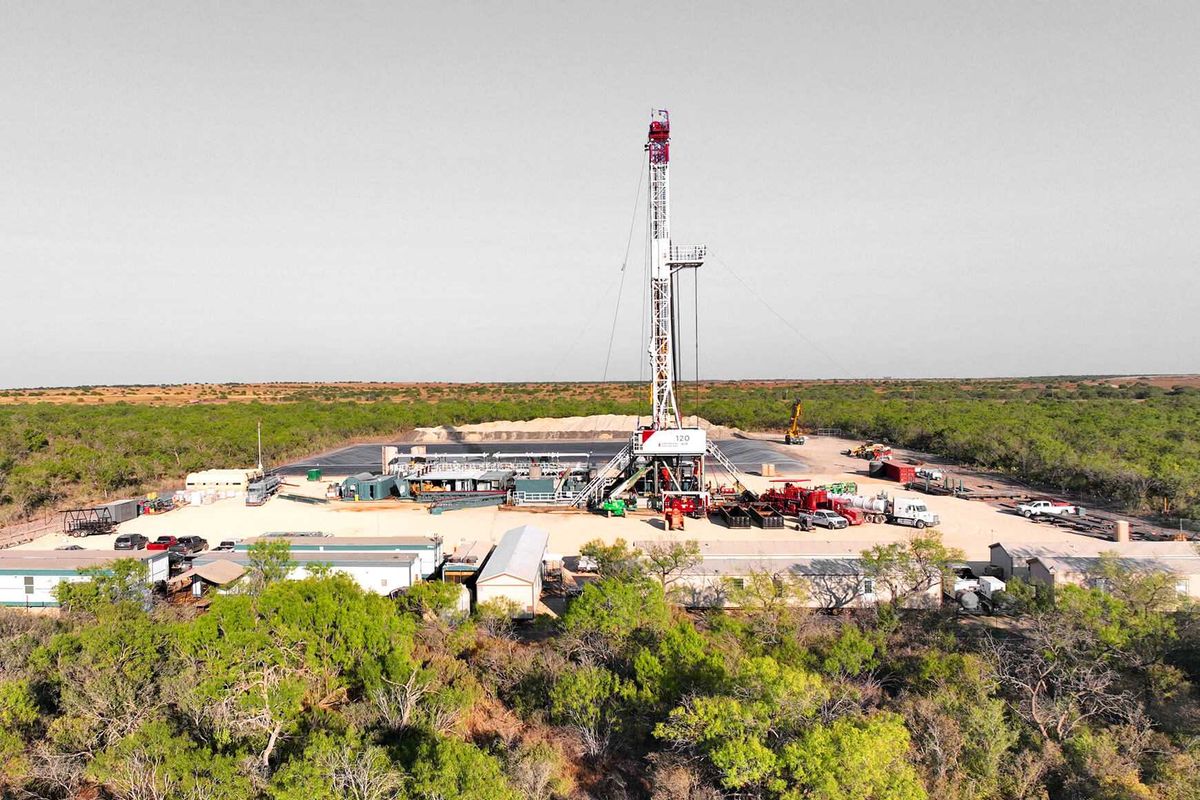
SMT Energy, CenterPoint and Irby Construction have broken ground on a 160-megawatt battery energy storage system in ERCOT's Houston zone. Photo via Getty Images

$135 million Houston battery storage facility breaks ground

coming soon

SMT Energy and CenterPoint Energy have partnered with utility infrastructure solutions provider Irby Construction Company to break ground on a 160 megawatt battery energy storage system (BESS) located in the Houston zone of the ERCOT market.

“We are proud to be underway and deliver this grid-strengthening project to Houston,” Kevin Midei, SVP of engineering, procurement and construction, at SMT Energy, said in a news release.

The BESS, SMT Houston IV, is expected to support grid stability, deliver fast-response power during peak demands and provide resiliency and renewable integration. The project is expected to be online by 2026 and store and dispatch enough electricity to power 8,800 homes in Texas annually.

SMT Energy is the project owner and developer, and CenterPoint Energy will serve as the interconnecting utility, integrating the system into Houston’s broader electrical network,” according to the companies. Irby Construction will serve as the engineering, procurement, and construction (EPC) contractor, and construction of the project is expected to be completed by July. On May 14, the companies broke ground with a ribbon-cutting ceremony to symbolize the start of the build.

“Projects like this demonstrate how collaboration and forward-thinking infrastructure come together to power a more resilient energy future,” Tony Gardner, SVP and chief customer officer at CenterPoint, said in a news release. “At CenterPoint, we recently completed nearly 90 percent of our overall grid resiliency improvements. This is one more action we are taking to build a more resilient and reliable grid to better serve our customers.”

In March, Colorado-based SMT Energy secured $135 million in funding for the SMT Houston IV, led by Macquarie and KeyBanc Capital Markets as joint lead arrangers. In 2023, SMT Energy and joint venture partner SUSI Partners announced plans to add 10 battery storage projects to Texas, which would double capacity from 100 megawatts to 200 megawatts in the Houston and Dallas areas.

In 2019, Irby began construction on the Manatee BESS site with Florida Power and Light (FPL), which was the world’s largest BESS project at the time. Irby has built over 30 BESS sites and has more than 20 currently under construction or contract.

Ad Placement 300x100
Ad Placement 300x600

CultureMap Emails are Awesome

Wind and solar supplied over a third of ERCOT power, report shows

power report

Since 2023, wind and solar power have been the fastest-growing sources of electricity for the Electric Reliability Council of Texas (ERCOT) and increasingly are meeting stepped-up demand, according to a new report from the U.S. Energy Information Administration (EIA).

The report says utility-scale solar generated 50 percent more electricity for ERCOT in the first nine months this year compared with the same period in 2024. Meanwhile, electricity generated by wind power rose 4 percent in the first nine months of this year versus the same period in 2024.

Together, wind and solar supplied 36 percent of ERCOT’s electricity in the first nine months of 2025.

Heavier reliance on wind and solar power comes amid greater demand for ERCOT electricity. In the first nine months of 2025, ERCOT recorded the fastest growth in electricity demand (5 percent) among U.S. power grids compared with the same period last year, according to the report.

“ERCOT’s electricity demand is forecast to grow faster than that of any other grid operator in the United States through at least 2026,” the report says.

EIA forecasts demand for ERCOT electricity will climb 14 percent in the first nine months of 2026 compared with the same period this year. This anticipated jump coincides with a number of large data centers and cryptocurrency mining facilities coming online next year.

The ERCOT grid covers about 90 percent of Texas’ electrical load.

Micro-nuclear reactor to launch next year at Texas A&M innovation campus

nuclear pilot

The Texas A&M University System and Last Energy plan to launch a micro-nuclear reactor pilot project next summer at the Texas A&M-RELLIS technology and innovation campus in Bryan.

Washington, D.C.-based Last Energy will build a 5-megawatt reactor that’s a scaled-down version of its 20-megawatt reactor. The micro-reactor initially will aim to demonstrate safety and stability, and test the ability to generate electricity for the grid.

The U.S. Department of Energy (DOE) fast-tracked the project under its New Reactor Pilot Program. The project will mark Last Energy’s first installation of a nuclear reactor in the U.S.

Private funds are paying for the project, which Robert Albritton, chairman of the Texas A&M system’s board of regents, said is “an example of what’s possible when we try to meet the needs of the state and tap into the latest technologies.”

Glenn Hegar, chancellor of the Texas A&M system, said the 5-megawatt reactor is the kind of project the system had in mind when it built the 2,400-acre Texas A&M-RELLIS campus.

The project is “bold, it’s forward-looking, and it brings together private innovation and public research to solve today’s energy challenges,” Hegar said.

As it gears up to build the reactor, Last Energy has secured a land lease at Texas A&M-RELLIS, obtained uranium fuel, and signed an agreement with DOE. Founder and CEO Bret Kugelmass said the project will usher in “the next atomic era.”

In February, John Sharp, chancellor of Texas A&M’s flagship campus, said the university had offered land at Texas A&M-RELLIS to four companies to build small modular nuclear reactors. Power generated by reactors at Texas A&M-RELLIS may someday be supplied to the Electric Reliability Council of Texas (ERCOT) grid.

Also in February, Last Energy announced plans to develop 30 micro-nuclear reactors at a 200-acre site about halfway between Lubbock and Fort Worth.

Rice University partners with Australian co. to boost mineral processing, battery innovation

critical mineral partnership

Rice University and Australian mineral exploration company Locksley Resources have joined together in a research partnership to accelerate the development of antimony processing in the U.S. Antimony is a critical mineral used for defense systems, electronics and battery storage.

Rice and Locksley will work together to develop scalable methods for extracting and utilizing antimony. Currently, the U.S. relies on imports for nearly all refined antimony, according to Rice.

Locksley will fund the research and provide antimony-rich feedstocks and rare earth elements from a project in the Mojave Desert. The research will explore less invasive hydrometallurgical techniques for antimony extraction and explore antimony-based materials for use in batteries and other energy storage applications.

“This strategic collaboration with Rice marks a pivotal step in executing Locksley’s U.S. strategy,” Nathan Lude, chairman of Locksley Resources, said in a news release. “By fast-tracking our research program, we are helping rebuild downstream capacity through materials innovation that the country urgently requires.”

Pulickel Ajayan, the Benjamin M. and Mary Greenwood Anderson Professor of Materials Science and Nanoengineering at Rice, is the principal investigator of the project.

“Developing scalable, domestic pathways for antimony processing is not only a scientific and engineering challenge but also a national strategic priority,” Ajayan said in the news release. “By combining Rice’s expertise in advanced materials with Locksley’s resources, we can address a critical supply chain gap and build collaborations that strengthen U.S. energy resilience.”

The Rice Advanced Materials Institute (RAMI) will play a major role in supporting the advancement of technology and energy-storage applications.

“This partnership aligns with our mission to lead in materials innovations that address national priorities,” Lane Martin, director of RAMI, said in a news release. “By working with Locksley, we are helping to build a robust domestic supply chain for critical materials and support the advancement of next-generation energy technologies.”