








Editor's note: From DOE funding for underground power line research to Zeta Energy's big deal with, these are the top headlines that resonated with EnergyCapital readers on social media and daily newsletter this week.
Investors from Houston and Boston fuel Greentown with $4M commitment
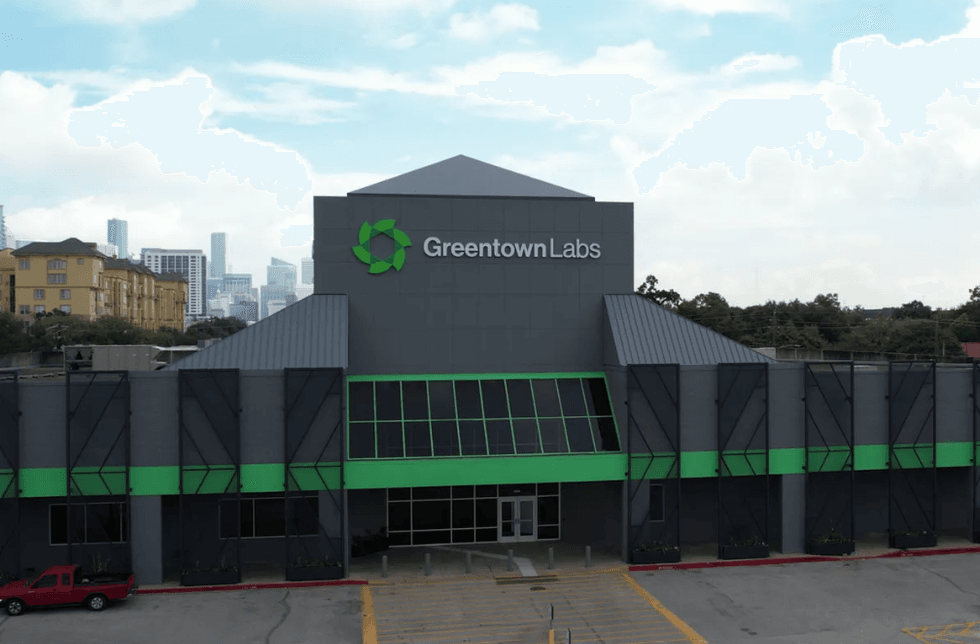
A mix of public and private investors have funded Greentown Labs. Photo via GreentownLabs.com
Greentown Labs, a climatetech incubator with locations in the Houston and Boston areas, has announced it has received funding from a mix of investors.
The $4 million in funding came from both of the Houston and Massachusetts locations. Houston investors included Bobby Tudor, CEO of Artemis Energy Partners and chairman of the Houston Energy Transition Initiative; David Baldwin, co-founder of OpenMinds and TEX-E and partner at SCF Partners; and Rice University. Other investors included MassDevelopment and the City of Somerville.
“The challenges of the energy transition are immense, and the role played by technology incubators like Greentown Labs is essential,” Tudor says in a news release. “We believe this role, which is a partnership between academia, industry, philanthropists, entrepreneurs, and governments, is the best way to get to effective, scalable solutions in a time frame that the urgency of the challenge requires. We need all hands on deck, and this partnership between Massachusetts and Texas can be a role model for others.” Continue reading.
Houston launches Google-backed tool to address urban tree cover disparities
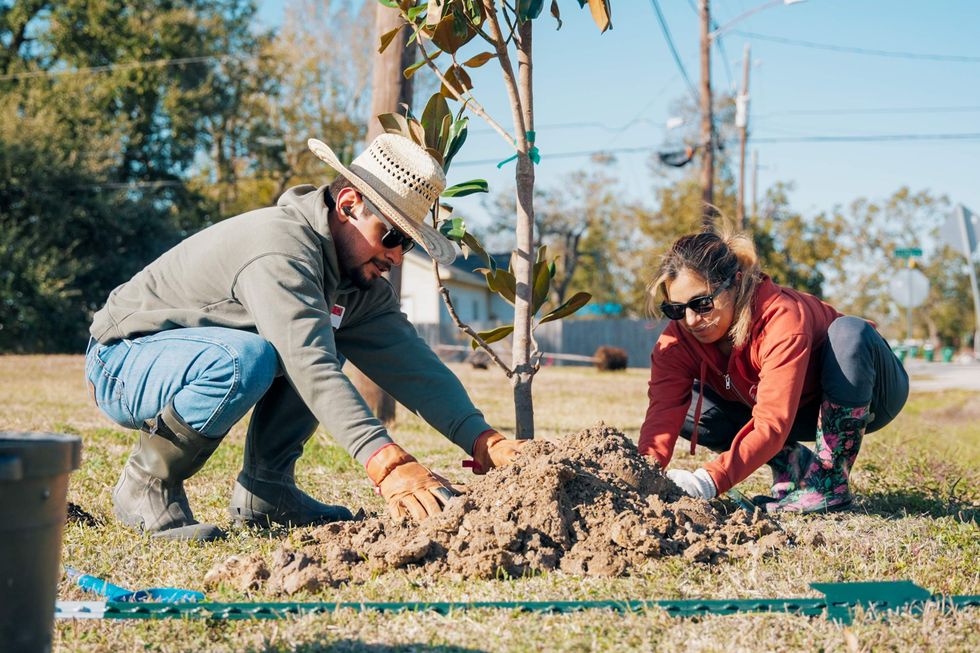
American Forests is aiming to assist with at least 100 cities to make progress on Tree Equity by 2030. Photo by Thomas Koenig/Big Pineapple Productions
The oldest national nonprofit conservation organization in the U.S American Forests has launched the Houston Tree Equity Score Analyzer, which was developed through local nonprofit Trees For Houston and local stakeholders from local government, environmental groups and the public health sector, and supported by Google’s philanthropic arm Google.org with a $450,000 grant.
To mark the launch, Trees For Houston and American Forest celebrated the partnership and worked to plant 50 trees at Shadydale Elementary in Northeast Houston on December 6.
“This marks a significant milestone for Houston's urban forestry efforts,” says Texas State Representative Senfronia Thompson at the December 6 event. “This effort goes beyond simply planting trees—it’s about creating the foundation for a greener, more inclusive future for our community. By uniting diverse resources and partners, including American Forests, Google.org and Trees For Houston, we’re showcasing a powerful dedication to enhancing the environmental well-being and quality of life in our urban areas.” Continue reading.
Houston company secures $10M contract to deliver subsea well decommissioning solution
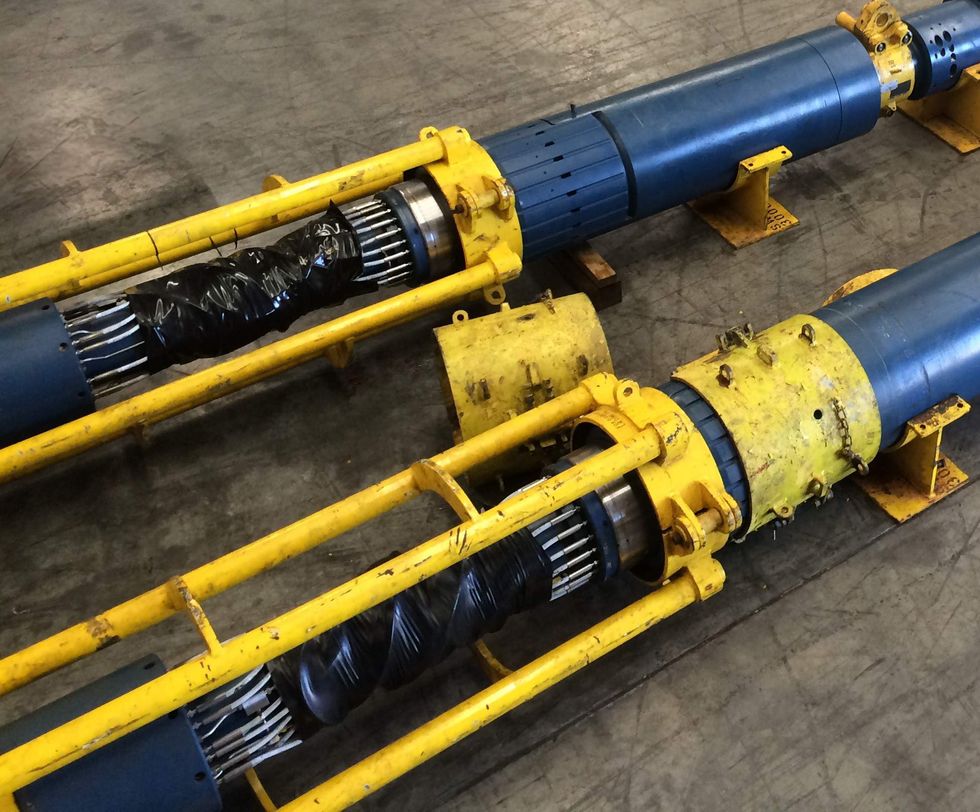
Expro has secured a $10 million contract to provide a subsea well decommissioning solution, combining subsea safety systems and surface fluid management to support safe re-entry and fluid management for plugged and abandoned wells. Photo courtesy of Expro
Houston energy services provider Expro was awarded a contract valued at over $10 million for the provision of a well decommissioning solution.
The solution will combine subsea safety systems and surface processing design that can enable safe entry to the well and management of well fluids.
“The contract reinforces our reputation as the leading provider of subsea safety systems and surface well test equipment, including within the P&A sector,” Iain Farley, Expro’s regional vice president for Europe and Sub-Saharan Africa, says in a news release. Continue reading.
This Houston innovator's innovative corrosion detection tech is vital to the future of energy

Anwar Sadek of Corrolytics joins the Houston Innovators Podcast to discuss his company's growth and move to Houston. Photo courtesy
Houston-based Corrolytics approach is to help revolutionize and digitize microbial corrosion detection — both to improves efficiency and operational cost for industrial companies, but also to move the needle on a cleaner future for the energy industry.
"We are having an energy transition — that is a given. As we are bringing new energy, there will be growth of infrastructure to them. Every single path for the energy transition, corrosion will play a primary role as well," Anwar Sadek, co-founder and CEO of Corrolytics, says on the Houston Innovators Podcast.
The technology Sadek and his team have created is a tool to detect microbial corrosion — a major problem for industrial businesses, especially within the energy sector. Sadek describes the product as being similar to a testing hit a patient would use at home or in a clinic setting to decipher their current ailments. Continue reading.
Houston company's $2B carbon-negative fuel project to rise in Southeast Texas

Pathway Energy has announced a major sustainable aviation fuel project in Port Arthur, Texas. Rendering courtesy of Pathway Energy
Houston developer of ultra carbon-negative fuels projects Pathway Energy announced a series of commercial-scale sustainable aviation fuel (SAF) facilities with the first being based in Port Arthur, Texas.
The project, estimated to be valued at $2 billion, will be one of the largest decarbonization projects in the world.
Pathway plans to bring commercial SAF to market with its years of experience in waste and biomass conversion processes and technologies that include biomass gasification, Fischer-Tropsch, biomass power generation, and complex biorefinery and industrial processes. Continue reading.