








Editor's note: The top energy transition stories for the start of October include Texas' big bet on nuclear energy, ERCOT's innovative efforts, CenterPoint's capital improvement plan, and more. Read on for the five most-read EnergyCapitalHTX stories published Oct.1-15, 2025:
1. Policy adviser tapped to lead ‘nuclear renaissance’ in Texas

Jarred Shaffer has been named director of the new Texas Advanced Nuclear Energy Office. Photo via LinkedIn.
As Texas places a $350 million bet on nuclear energy, a budget and policy adviser for Gov. Greg Abbott has been tapped to head the newly created Texas Advanced Nuclear Energy Office. Jarred Shaffer is now director of the nuclear energy office, which administers the $350 million Texas Advanced Nuclear Development Fund. The fund will distribute grants earmarked for the development of more nuclear reactors in Texas. Continue reading.
2. ERCOT steps up grid innovation efforts to support growing power demand

ERCOT has launched its new Grid Research, Innovation, and Transformation (GRIT) initiative to help resolve grid challenges and meet growing demand. Photo via Getty Images
As AI data centers gobble up more electricity, the Electric Reliability Council of Texas (ERCOT) — whose grid supplies power to 90 percent of Texas — has launched an initiative to help meet challenges presented by an increasingly strained power grid. ERCOT, based in the Austin suburb of Taylor, said its new Grid Research, Innovation, and Transformation (GRIT) initiative will tackle research and prototyping of emerging technology and concepts to “deeply understand the implications of rapid grid and technology evolution, positioning ERCOT to lead in the future energy landscape.” Continue reading.
3. CenterPoint launches $65B capital improvement plan
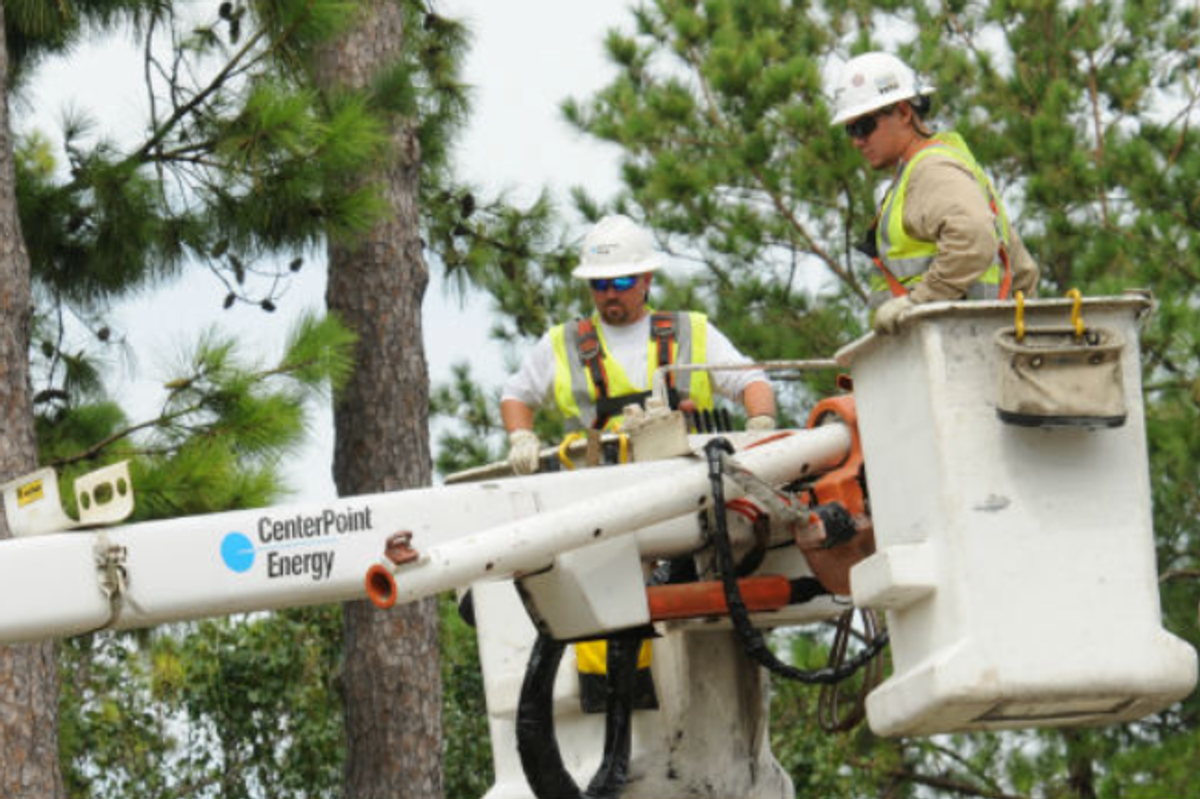
CenterPoint Energy has launched a $65 million capital improvement plan that will focus on building and maintaining a “resilient” electric grid. Photo via centerpointenergy.com
To support rising demand for power, Houston-based utility company CenterPoint Energy has launched a $65 billion, 10-year capital improvement plan. CenterPoint said that in its four-state service territory — Texas, Indiana, Minnesota and Ohio — the money will go toward building and maintaining a “resilient” electric grid and a safe natural gas system. Continue reading.
4. UH projects propose innovative reuse of wind turbines and more on Gulf Coast

The Houston projects involve the innovative reuse of oil rig platforms and wind turbines. Courtesy rendering
Two University of Houston science projects have been selected as finalists for the Gulf Futures Challenge, which will award a total of $50 million to develop ideas that help benefit the Gulf Coast. Sponsored by the National Academies of Science, Engineering and Medicine’s Gulf Coast Research Program and Lever for Change, the competition is designed to spark innovation around problems in the Gulf Coast, such as rising sea levels, pollution, energy security, and community resiliency. The two UH projects beat out 162 entries from organizations based in Alabama, Florida, Louisiana, Mississippi, and Texas. Continue reading.
5. Energy startup Base Power raises $1 billion series C round

Base Power, founded by Justin Lopas and Zach Dell, has closed one of the largest venture capital deals of the year. Photo courtesy Base Power.
Austin-based startup Base Power, which offers battery-supported energy in the Houston area and other regions, has raised $1 billion in series C funding—making it one of the largest venture capital deals this year in the U.S. Continue reading.