








Editor's note: It's a new week — start it strong with three quick things to know in Houston's energy transition ecosystem. Meet the fellows selected for a UH-Chevron program, Equinor's involvement with Houston-area CCS project, and events not to miss this week.
Upcoming events to put on your radar

Photo via Getty Images
It's a new month — here are two energy events to have on your radar.
- September 7 — Venture Houston is spotlighting digitization and decarbonization this year. It's a must-attend event for investors, entrepreneurs, and more.
- September 21 — The Rice Alliance Energy Tech Venture Forum is an opportunity to learn about the latest emerging technologies, meet investors to seek funding, see promising companies, and more.
CCS project near Houston secures new local partner
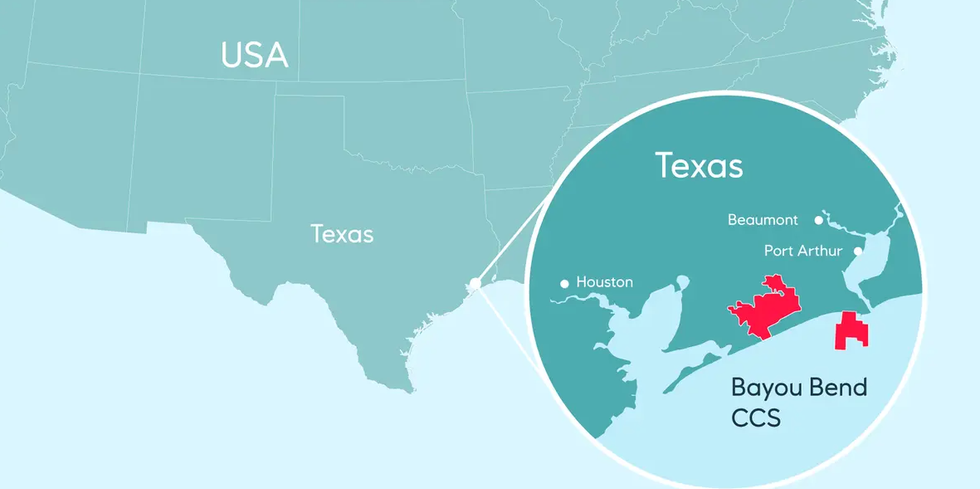
The project is located in southeast Texas, about 70 miles outside of Houston. Image via equinor.com
As of last week, Equinor, which has its United States headquarters in Houston, now owns a 25 percent interest in Bayou Bend CCS LLC, one of the largest domestic carbon capture and storage projects. The project — a JV between Chevron, Talos Energy Inc., and now Equinor, is located along the Gulf Coast in southeast Texas. The terms of the deal were not disclosed.
“Commercial CCS solutions are critical for hard-to-abate industries to meet their climate ambitions while maintaining their activity," Grete Tveit, senior vice president for Low Carbon Solutions in Equinor, says in a news release. "Entering Bayou Bend strengthens our low carbon solutions portfolio and supports our ambition to mature and develop 15-30 million tonnes of equity CO2 transport and storage capacity per year by 2035. Our experience from developing carbon storage projects can help advance decarbonization efforts in one of the largest industrial corridors in the US."
In 2021, Texas General Land Office in Jefferson County, Texas, selected Talos and Carbonvert for the carbon storage lease, located in state waters offshore Beaumont and Port Arthur, Texas. Chevron joined the JV in May 2022. The project expanded earlier this year.
Meet Chevron's fellows from the University of Houston

The PhD and doctoral students will each receive a one-year $12,000 fellowship, along with mentoring from experts at UH and Chevron. Photo via UH.edu
The University of Houston has named eight graduate students to its first-ever cohort of UH-Chevron Energy Graduate Fellows. The PhD and doctoral students will each receive a one-year $12,000 fellowship, along with mentoring from experts at UH and Chevron. Their work focuses on energy-related research in fields ranging from public policy to geophysics and math. The fellowship is funded by Chevron.
“The UH-Chevron Energy Fellowship program is an exciting opportunity for our graduate students to research the many critical areas that impact the energy industry, our communities and our global competitiveness,” Ramanan Krishnamoorti, UH's Vice President for Energy and Innovation says in a statement.
“Today’s students not only recognize the importance of energy, but they are actively driving the push for affordable, reliable, sustainable and secure energy and making choices that clearly indicate that they are meaningfully contributing to the change,” he continues.